Re-Thinking Epigenetic Therapies for B-Cell Lymphoma

Histone deacetylase inhibitors (HDACi) are small molecules that alter the function of histones, or proteins that bind to DNA and help to determine chromosome shape and gene activity. In cancer treatment, HDACi are traditionally considered epigenetic drugs because of their capacity to modify gene expression to halt tumor cell division, but new research from the Cerchietti Research Laboratory at Weill Cornell Medicine poses rationale for studying the inhibitors’ biological effects through a different lens – their impact on cell metabolism.

Benet Pera, Ph.D., along with Weill Cornell colleagues, as well as researchers from the Helmholtz Institute of Computational Biology in Germany and the Lady Davis Institute for Medical Research in Canada, conducted the study to improve the efficacy of HDACi in people with B-cell lymphoma, which is relatively low compared to that in T-cell lymphoma. Several HDACi, including vorinostat and romidepsin, have been approved by the United States Food and Drug Administration (FDA) for treatment of certain T-cell lymphoma subtypes.

Contrary to their namesake, histone deacetylase inhibitors are able to affect a long list of non-histone proteins, among them metabolic enzymes. These agents can be more appropriately referred to as lysine deacetylase inhibitors (KDACi). Due to the activity of KDACi in proteins involved in metabolic pathways, Pera et al. investigated the effects of the KDACi panobinostat in the cell metabolism of relapsed/refractory diffuse large B-cell lymphoma (DLBCL) patients enrolled in a phase II trial. Metabolic profiling of the patients’ plasma before and after KDACi-treatment demonstrated that panobinostat prompts DLBCL cells to rely on a certain metabolic pathway, the choline pathway, for survival. The scientists found that in the lab, treating the cancer cells with a choline pathway inhibitor in combination with panobinostat produced superior anti-lymphoma effects in vitro and in animal models.

benet-pera“We are studying these so-called ‘epigenetic’ drugs from a different angle, hoping that metabolomics might hold the key to improving their clinical efficacy,” says Dr. Pera.

The research data recently published in the open-access journal EBioMedicine help to substantiate the team’s innovative re-application of epigenetic reagents, demonstrating the value and promise of the metabolic mechanisms by which KDACi/HDACi can improve current therapeutic options for people with B-cell lymphoma. The results also highlight the need to explore the unknown biological effects of this class of drugs before they can be successfully implemented in a clinical setting.
Lymphoma Program Patient Celebrates 100th Birthday

Silvia Brodsky is a self-proclaimed feisty woman from New York City whose hobbies include reading, listening to classical music, cooking and baking (She swears her dishes never taste the same twice!), and staying in touch with her four sons in Kentucky, New Jersey and Pennsylvania.

The not-so-typical? Silvia just turned 100 years old – and lives independently in Brooklyn with her 88-year-old sister.

100yo
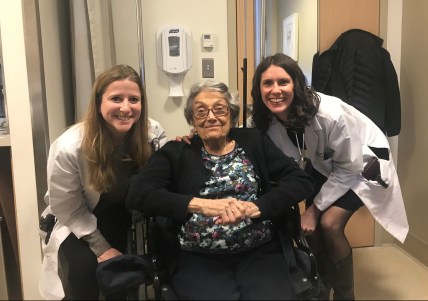
Silvia Brodsky (Center) celebrated her 100th birthday with Melanie Bernstein, PA, (Left) and Sarah Rutherford, MD, (Right).

In the fall of 2017, a biopsy of a swollen mass in Silvia’s neck led to a diagnosis of diffuse large B-cell lymphoma (DLBCL), a fast-growing cancer of abnormal B-cells. After feeling passed around by other institutions, Silvia and her family were thoroughly impressed by the efficiency and compassion of the Weill Cornell Medicine and NewYork-Presbyterian Hospital staff – particularly that of her physician, the Lymphoma Program’s Dr. Sarah Rutherford.

“Dr. Rutherford is an angel with hidden wings,” says Silvia. “All she has to do is walk in and smile, and I feel better.”

That’s high praise coming from Silvia, who places ultimate value on helping others. She considers herself lucky to have known her grandmother and great grandmother, her lifelong inspirations, whom she credits with teaching her how to take care of people by listening and giving advice. She heeds her great grandmother’s words daily: “If you haven’t helped anyone today, you’ve wasted your day.”

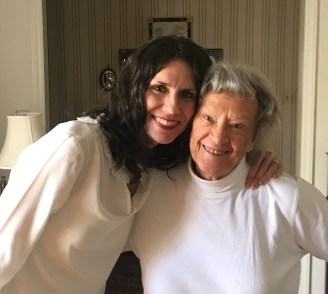
Dr. Rutherford is particularly close with her own grandmother, who turned 96 last year.

“I always have my grandmother in mind when taking care of older patients,” she says. “One of my primary goals is to improve the experiences and outcomes in older patients with lymphoma.”

rutherfordgrandmother-e1516113471970.jpg
Dr. Rutherford with her grandmother

The Lymphoma Program is proud to be entrusted with the care of patients of all ages and committed to enabling more people like Silvia lead long lives of spreading love and care to others.

Dr. Jia Ruan and Colleagues Encouraged by Long-Term Results of Chemo-Free MCL Treatment Regimen

Mantle cell lymphoma (MCL) is a rare subtype of non-Hodgkin lymphoma that occurs primarily in older adults. The disease is typically managed in the initial treatment setting with a combination of chemotherapy and immunotherapy, which tends not to be curative and may impart toxic side effects in some patients.

In search of an effective, less toxic treatment option for those afflicted by MCL, Dr. Jia Ruan and colleagues explored an alternative regimen free of conventional chemotherapy – lenalidomide plus rituximab – to be used in the initial treatment setting. Their multi-center phase II clinical trial of the novel biological pairing was the first-ever study of a non-chemotherapy first-line MCL treatment approach.

Thirty-eight MCL patients enrolled in the trial from July 2011 to April 2014. They received lenalidomide on days 1-21 of a 28-day cycle, and rituximab was administered four times per week during the first cycle, then once every other cycle. The first 12-cycle treatment was considered induction, or initial therapy, and was followed by a maintenance phase, in which therapy is provided to prevent relapse. Treatment was continuous until disease progression, and patients had the option to cease therapy after three years if in remission.

At the 2017 American Society of Hematology Annual Meeting, the researchers examined the long-term outcomes of the trial in a 5-year follow-up analysis to reveal that the drug combination shows promise for effective management of MCL, with the majority of trial participants doing well and maintaining good quality of life. About 90 percent of patients responded to the therapy, and over 60 percent remain in remission.

The research team also measured minimal residual disease (MRD) in patients’ blood, the small number of cancer cells that may be left after treatment that have the potential to grow and cause the patient to relapse. In the small subset of patients with available tumor tissues for MRD analysis, about 80 percent of patients were found to be MRD negative, further demonstrating the novel treatment regimen’s activity and feasibility as an additional therapeutic option for people with MCL.

Picture2
Dr. Jia Ruan

“We are encouraged by the quality and durability of the responses with the biologic doublet of lenalidomide plus rituximab as initial therapy for mantle cell lymphoma,” said Dr. Ruan. “We hope to bring this active combination to larger studies where it can be combined with other agents and compared to conventional chemotherapy.”