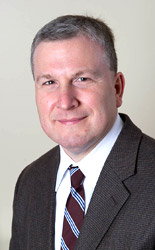
Weill Cornell’s Dr. John Leonard Elected Chair of Lymphoma Research Foundation Scientific Advisory Board


John Leonard, MD

The Lymphoma Research Foundation (LRF) has announced the election of John Leonard, MD, as the chairman of its Scientific Advisory Board.

Dr. Leonard is the associate dean for clinical research at Weill Cornell Medical College, vice chairman for clinical research in the Department of Medicine, and the Richard T. Silver Distinguished Professor of Hematology and Medical Oncology. He also serves as clinical director of the Weill Cornell Lymphoma Program, attending physician at NewYork-Presbyterian/Weill Cornell Medical Center, and is associate director for Clinical Research of the Weill Cornell Cancer Center.

Dr. Leonard’s two-year term as Chair began July 1, 2012.

Comprised of the world’s leading lymphoma researchers and oncologists, the Scientific Advisory Board formulates the LRF research portfolio, seeking out the most innovative and promising lymphoma research projects for support. The board reviews grant proposals and makes recommendations regarding research priorities and funding to the Foundation Board of Directors. The board also evaluates the progress of on-going research projects and guides the  direction of the Foundation’s research programs.

New Clinical Trial: GS-1101 (CAL-101) + Rituximab for Previously Treated CLL

A Phase 3, Randomized, Double-Blind, Placebo-Controlled Study Evaluating the Efficacy and Safety of GS 1101 (CAL 101) in Combination with Rituximab for Patients with Previously Treated Chronic Lymphocytic Leukemia

Update: this study is closed to enrollment. 

The Weill Cornell Lymphoma Program is now enrolling patients in a new clinical trial for people with previously treated Chronic Lymphocytic Leukemia (CLL). The sponsor is Gilead Sciences, and the principal investigator at Weill Cornell is Dr. Richard Furman. For more information about the study, please call Amelyn Rodriguez, RN at (212) 746-1362 or email Amelyn at amr2017@med.cornell.edu.

Study Details

The study will evaluate the effectiveness of the experimental drug GS-1101 (CAL-101) combined with rituximab in treating CLL.

GS-1101 (CAL-101) is a pill designed to block some of the cell functions that cause CLL to grow and survive and may help control the disease. Rituximab is FDA-approved as a treatment for CLL. It is possible that giving rituximab together with GS-1101 may have more activity against the CLL disease process than giving rituximab alone.

Study participants will be randomly assigned to one of two treatment groups:

  • Group A: rituximab and GS-1101
  • Group B: rituximab and placebo (an inactive pill that looks like GS-1101 but contains no medicine)

Treatment Plan

All study participants will receive rituximab via infusion 8 times over 24 weeks: Day 1, then Weeks 2, 4, 6, 8, 12, 16 and 20.

Participants will take GS-1101 or placebo twice daily for 24 weeks.

After 24 weeks of therapy with rituximab and GS-1101 or placebo, participants will continue on GS-1101 or placebo as long as their CLL is controlled. If their CLL gets worse, participants may be able to take part in a separate extension study where they receive GS-1101 at a higher or lower dose. Thus, everyone who is treated in this study has an opportunity to receive active GS-1101, either in the main study or the extension study.

New Clinical Trial: Ofatumumab and Bortezomib in Untreated Waldenstrom Macroglobulinemia

A Multicenter Phase II Study of Ofatumumab and Bortezomib (OB) in Previously Untreated Patients with Waldenström Macroglobulinemia

Update: this study is closed to enrollment. 
The Weill Cornell Lymphoma Program is now enrolling patients in a new clinical trial for people with Waldenstrom Macroglobulinemia who have not been treated. The study sponsor is the National Comprehensive Cancer Network (NCCN). The principal investigator at Weill Cornell is Dr. Peter Martin.

For more information about the study, please call Amelyn Rodriguez, RN at (212) 746-1362 or email Amelyn at amr2017@med.cornell.edu.

Key Eligibility

  • Men and women age 18 and older
  • Diagnosis of Waldenstrom Macroglobulinemia (WM)
  • No prior anti-neoplastic therapy for WM
  • Detailed eligibility reviewed when you contact the study team

Study Details

Although there is currently no standard treatment for first-line management of WM, most clinicians and investigators believe that anti-CD20 directed therapy should compromise part of the regimen. Because it was the first therapeutic monoclonal antibody approved by the FDA , rituximab has been evaluated more than any antibody and has shown modest effects with limited toxicity. However, new treatments for WM are needed.

Ofatumumab has been approved for treatment of relapsed/refractory Chronic Lymphocytic Leukemia (CLL). It is an anti-CD20 monoclonal antibody that compared favorably to rituximab in a recent Phase 2 trial in patients with WM.

The purpose of the study is to determine how well previously untreated people with Waldenstrom Macroglobulinemia respond to treatment with ofatumumab in combination with bortezomib (Velcade). The study will also evaluate the safety of ofatumumab in combination with bortezomib.

Treatment Plan

Study participants will have four 28-day cycles of induction phase therapy. Participants will receive treatments weekly for three weeks, and then have a rest period (no treatment) for the fourth week. After the four cycles, there will be 4 weeks of no therapy and then 4 cycles of maintenance phase therapy. The maintenance cycles will be 28 days long. Participants will receive three weeks of treatment, then a resting period (no treatment) for the fourth week. This will be followed by four weeks of rest (no treatments). Then a new cycle will begin. Thus a new cycle of maintenance treatment will begin every 8 weeks. The entire period for both induction and maintenance therapy will be 1 year (52 weeks).

Participants will be followed until disease progression or 5 years from study entry, whichever comes first.