Research Study: Dietary Cholesterol Associated with Increased Cancer Risk, Including NHL

A study published last year in Annals of Oncology found that dietary cholesterol (found only in animal-based foods, like meat and dairy products) was associated with an increased risk of cancer.

Researchers at the Centre for Chronic Disease Prevention and Control, Public Health Agency of Canada mailed questionnaires to thousands of men and women with various types of cancers and controls without cancer, asking about their eating habits two years prior to the study to evaluate the amount of cholesterol they consumed.

The researchers found that cholesterol intake was associated with elevated risk of non-Hodgkin lymphoma, as well as breast cancer (specifically postmenopausal women), and cancers of the stomach, colon, rectum, pancreas, lung, breast cancer , testis, kidney, bladder. People who had the highest intake of cholesterol were 40 to 70 percent more likely to develop these cancers as compared to people with the lowest consumption of cholesterol.

The authors write, “Our findings add to the evidence that high cholesterol intake is linked to increased risk of various cancers. A diet low in cholesterol may play a role in the prevention of several cancers.”
Weill Cornell Researchers: Velcade + PD 0332991 Weaken & Defeat Myeloma Cells, Potential for Lymphoma

In laboratory experiments, researchers at Weill Cornell Medical College have demonstrated that the cancer fighting effects of Velcade (bortezomib) and PD 0332991  were exponentially multiplied when used together in their laboratory studies on multiple myeloma tumor cells.

The normal cellular growth cycle is derailed in cancer. Uncontrolled growth and multiplication is often the result. The researchers found that PD 0332991 stops the cellular cycle in a vulnerable moment, leaving the cancer cell wide open for cellular destruction by Velcade.

The study, published online last month by the journal Blood, is the first to show that precise timing of therapies that target a cancer cell’s cycle — the life phases leading to its division and replication — disables key survival genes, resulting in cell death. The drug that delivers the weakening jab at the cell cycle is the experimental agent PD 0332991, which allows Velcade, a proteasome inhibitor already approved for use in myeloma and lymphoma, to land the final defeating blow at lower than normal doses.

Dr. Selina Chen-Kiang, professor of Pathology and Laboratory Medicine and of Microbiology and Immunology at Weill Cornell Medical College was the lead scientist on the study. In an interview Dr. Chen-Kiang said:

“Because robust functioning of the cell cycle is crucial to cancer growth and survival, this mechanism-based strategy could theoretically be used against many kinds of cancers.”

The same combination is being tested in patients with mantle cell lymphoma in a Weill Cornell investigator-initiated study led by Dr. John Leonard. Click here for more information about the mantle cell lymphoma study.


Weill Cornell’s Dr. Cerchietti Receives Doris Duke Clinical Scientist Award for Study of B-Cell Lymphoma

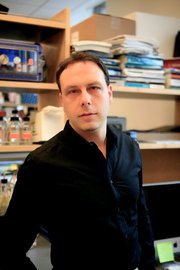
Dr. Leandro Cerchietti

Dr. Leandro Cerchietti has received a Doris Duke Clinical Scientist Development Award (one of only 12 such awards given yearly by the Doris Duke Foundation). Funding is $150,000 per year spanning 3 years.

Dr. Cerchietti’s project centers on the role of metabolism in determining the clinical behavior of tumors, using metabolomic profiling for the study of B-cell lymphoma.

“Metabolism” is a term that refers to all the biochemical processes of an organ, tumor, or cell, that sustain life. These processes allow cells to grow, reproduce, maintain their structures and respond to environmental changes. Dr. Cerchietti’s study will reveal how — and what — the lymphoma “eats” to survive. It will also explore how these pathways can be “manipulated” in order to “starve them to death.” The goals is to ultimately launch the development of a new class of specific (and non-toxic drugs), and treatments, that could benefit patients with lymphomas.

“We will harness the power of metabolomic profiling to detect certain biological processes in patients; to ascertain whether drugs are hitting their targets in vivo; and to predict clinical outcomes in patients. I think this work has the potential to make important scientific and translational contributions to the diagnosis and treatment of B-cell lymphomas,” says Dr. Cerchietti.