Global Collaboration: Lymphoma Researchers Attend Workshop at Shanghai Institute of Hematology

In early July, several researchers from the Weill Cornell Medicine/NewYork-Presbyterian (WCM/NYP) Lymphoma Program traveled to Shanghai, China to participate in the first Lymphoma Research Workshop, jointly sponsored by WCM/NYP and Shanghai Institute of Hematology (SIH). The workshop aimed to foster clinical and translational research exchange and collaboration, with the goal of further global alliance with leading Chinese institutions.

Our own Drs. Leandro Cerchietti, Peter Martin, Ari Melnick, Kristy Richards, and Jia Ruan were in attendance. Drs. Melnick and Ruan co-organized the workshop with Drs. Saijuan Chen and Weili Zhao from SIH. SIH and its affiliated Ruijin Hospital (RJH) is a leader in human genomics and lymphoma research in China.

RuanMelnickShanghai
Dr. Ari Melnick (Left) and Dr. Jia Ruan

Dr. Melnick began by introducing the lymphoma research missions at WCM/NYP and provided an overview of our translational program, which integrates state-of-the-art genetic, epigenetic, and proteomic approaches to study lymphoma pathogenesis and inform development of mechanism-based therapeutics.

Dr. Zhao followed with a review of the recent lymphoma program developments at Ruijin Hospital, which focuses on building a multi-disciplinary diagnosis and treatment team. RJH’s translational development has been aimed at building a lymphoma biobank, next-generation sequencing, system biology, and biomarker investigations to support clinical research.
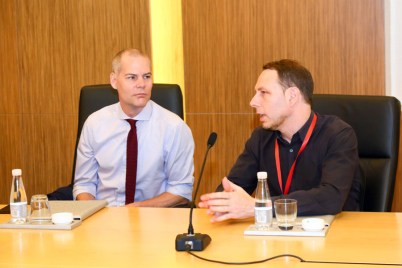
MartinCerchiettiShanghai
Dr. Peter Martin (Left) and Dr. Leandro Cerchietti

On the project level, Dr. Cerchietti discussed bench-to-bedside translation of epigenetic modifying agents, such as novel treatments that sensitize chemotherapy responses in patients with diffuse large B-cell lymphoma (DLBCL). Dr. Martin then provided a comprehensive overview of the management approach for DLBCL in the U.S., reviewing important study design and findings of DLBCL clinical trials that incorporated novel agents, including epigenetic modifiers. Dr. Richards spoke about promises and challenges in canine lymphoma research in both the disease and drug development models.
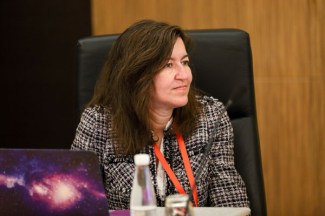
RichardsShanghai
Dr. Kristy Richards

Additionally, Dr. Pengpeng Xu from RJH presented preliminary data of a phase 1 study using an epigenetic hypomethylating agent in combination with chemotherapy for DLBCL patients. This joint clinical project developed from the two institutions’ shared translational interest and expertise in exploring therapeutic potential of epigenetic agents in lymphoma.

Drs. Ruan and Melnick concluded the workshop by thanking the hosts at the Shanghai Institute of Hematology and Ruijin Hospital for their gracious hospitality. Faculty from both institutions are impressed by the progress of the ongoing collaboration and support further development of translational and clinical projects in the future, including academic exchange and joint translational and clinical trials.

 

Expert Pathologic Review Demonstrates Notable Significance in Lymphoma Care

A new study published by the Journal of Clinical Oncology proposes that pathologic review has direct implications on lymphoma diagnosis and management.

Over a four-year span, the Lymphopath Network, a national hematopathology expert network in France that reviews lymphoma cases prior to therapeutic decision, reviewed over 30,000 samples from patients with newly diagnosed or suspected lymphoma. Researchers found that a change in diagnosis from original referral to expert review occurred in almost 20 percent of patients, and the change was significant enough to potentially impact care in over 17 percent of patients.

Diagnostic discrepancies were greater in patient samples sent with a provisional diagnosis than in those sent with a formal diagnosis, meaning that when referring pathologists were confident about the diagnosis, they were typically correct. Although most discrepancies were due to misclassifications of lymphoma subtypes, some patients were referred with benign conditions that were deemed lymphomas after pathologic review.

The study implies that frequently, in order for patients to receive optimal care, their diagnoses are best determined in collaboration with expert pathologists – especially in the current age of personalized medicine.

Picture1
Dr. Peter Martin

“As doctors who take care of people with cancer, so much of what we do is dependent on having a precise diagnosis,” said Peter Martin, Chief of the Lymphoma Program at Weill Cornell Medicine and NewYork-Presbyterian. “My bias is to meet people early on so that I can help direct the diagnostic evaluation, minimize unnecessary testing, and work with our experts in radiology, surgery, and pathology to arrive at the correct diagnosis as rapidly as possible. Importantly, the findings from the Lymphopath Network study highlight that even when a diagnosis has already been made, a second opinion regarding pathology can be important, particularly when there is any diagnostic uncertainty.”

As part of our mission to deliver precise, individualized care to as many patients as possible, expert hematologists and oncologists at the Weill Cornell Medicine and NewYork-Presbyterian Lymphoma Program collaborate with our team of world-class hematopathologists to provide collective assessment of all individual cases, working our hardest to secure an accurate diagnosis before proceeding with the appropriate therapy.

FDA Approves Subcutaneous Administration of Rituximab for Three Lymphoma Types

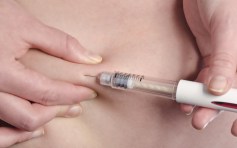
On June 22, 2017, the United States Food and Drug Administration (FDA) approved subcutaneous injection of rituximab plus hyaluronidase human for people with follicular lymphoma (FL), diffuse large B-cell lymphoma (DLBCL), and chronic lymphocytic leukemia (CLL). Subcutaneous administration refers to the method of delivering a drug under the skin rather than directly into a vein as performed during intravenous (IV) administration.

insulin injection

Administration of rituximab under the skin tends to take less than 10 minutes, whereas the traditional IV method can last several hours. The technique also allows for fixed dosing, which can reduce preparation time and excess drug waste, and may be more cost effective than IV infusion.

The approved treatment is to be employed only after patients have received at least one cycle of intravenous rituximab.

Approval comes based on the results of a series of clinical trials demonstrating comparable safety and efficacy outcomes across subcutaneous and intravenous administration.