FDA-Approved Drug to Treat Viral Infections Shows Promise Against Lymphomas

Ribavirin, a drug that has been approved by the Food and Drug Administration (FDA) to treat hepatitis C, as well as some viral respiratory infections and viral hemorrhagic fevers, has shown promising activity against some types of lymphoma. There is a growing movement to repurpose older drugs that might have mechanisms of action that could benefit cancer patients.

lec2010
Dr. Leandro Cerchietti

Based on preclinical work performed in the laboratory of Dr. Leandro Cerchietti, the Weill Cornell Medicine and NewYork-Presbyterian Lymphoma Program is planning a clinical trial examining the oral antiviral drug ribavirin in patients with two non-Hodgkin lymphoma subtypes, slow growing follicular lymphoma and mantle cell lymphoma. This clinical trial will be led by principal investigator Dr. Sarah Rutherford.

Previously, physicians and scientists in the Weill Cornell Medicine Lymphoma Program have demonstrated that ribavirin may be able to inhibit lymphoma cell growth. Dr. Cerchietti’s laboratory research has shown that the eukaryotic translation initiation factor 4E (eiF4E) is blocked by ribavirin in B-cell lymphoma cell lines, as well as in patient-derived xenograft (PDX) models, which more closely resemble the way cancer behaves in the human body. Blocking eiF4E ultimately leads to decreases in key proteins (MYC, BCL2, and BCL6) which are crucial for lymphoma cells’ survival.
sar2014
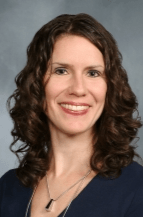
Dr. Sarah Rutherford

Additionally, Dr. Rutherford conducted a retrospective review of patients with lymphoma who underwent stem cell transplants at NewYork-Presbyterian Hospital/Weill Cornell Medicine. Patients who were treated with ribavirin for viral infections just before or after their stem cell transplant had better lymphoma-related outcomes compared to what was expected based on their disease risk profiles.

This clinical trial, run by Dr. Rutherford and Dr. Cerchietti, will enroll patients with follicular lymphoma and mantle cell lymphoma, and they will receive 3-6 months of oral ribavirin. Using a blood test, Dr. Rutherford and Dr. Cerchietti will monitor for the presence of a marker of lymphoma in the blood to confirm that ribavirin has the intended anti-lymphoma effect.

“We are excited about opening this clinical trial and aim to conduct additional trials in the future that combine ribavirin with other drugs,” said Dr. Rutherford. “Our goal is to ultimately develop a well-tolerated, targeted oral regimen to control lymphomas.”

This preclinical research is supported by a Translational Research Program from the Leukemia and Lymphoma Society (LLS) awarded to Dr. Cerchietti.
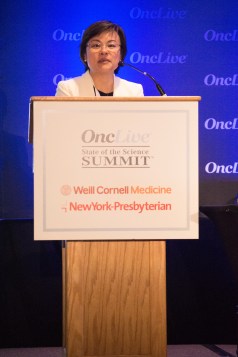
Dr. Jia Ruan Reviews Updates in T-Cell Lymphoma Research and Treatment

SOSS_Jia_RuanT-cell lymphoma is a complex form of non-Hodgkin lymphoma caused by abnormal clonal growth of mature T-cell lymphocytes. The disease is uncommon, affecting approximately 5-10 percent of lymphoma patients in the United States.
Historically, T-cell lymphoma was classified according to histological (microscopic anatomy) features, but thanks to new technology such as next-generation DNA sequencing and gene expression profiling, we are now able to refine disease classification based on molecular features and cell of origin. Dr. Jia Ruan discussed some of these updates at the OncLive State of the Science Summit on Hematologic Malignancies.

The most common subtypes of systemic peripheral T-cell lymphoma (PTCL) are: peripheral T-cell lymphoma not otherwise specified (PTCL-NOS), anaplastic large-cell lymphoma (ALCL), and angioimmunoblastic T-cell lymphoma (AITL). Cutaneous T-cell lymphoma (CTCL) primarily affects the skin and tends to be less aggressive compared to systemic subtypes.

While outcomes vary by T-cell lymphoma subtype, the five-year overall survival rate for systemic PTCL (with the exception of ALK+ ALCL) is between 20-30 percent, which Dr. Ruan said is suboptimal and indicative of a need for progress from a clinical research and clinical management standpoint.

Physician-researchers are taking steps to improve efficacy of initial T-cell lymphoma therapy so that as many patients as possible can achieve complete remission (CR) and stay in remission for as long as possible. Strides include incorporating frontline stem cell transplant as a way to prolong progression-free survival (PFS) in a portion of patients, as well as moving novel agents into initial combination therapy.

To date, four FDA-approved novel agents, namely pralatrexate (anti-folate), romidepsin (histone deacetylase or HDAC inhibitor), brentuximab vedotin (CD30 antibody-drug conjugate), and belinostat (HDAC inhibitor), are being evaluated in clinical trials for evidence of enhanced effectiveness when combined with cyclophosphamide, doxorubicin hydrochloride, vincristine, prednisone (CHOP)-like chemotherapy. Clinicians eagerly await the results of these studies.

In CTCL, Weill Cornell Medicine (WCM) and NewYork-Presbyterian’s (NYP) multidisciplinary approach to healthcare allows medical oncologists and dermatologists to collaboratively diagnose and manage cases, as well as offer a range of treatment options. For cases with thin layers of skin involvement, skin-directed therapies include steroids, topical chemicals, light therapy, and electron beam radiation. For cases that progress from the skin to the lymphatic and blood system, treatment may include systemic agents like romidepsin, retinoid analogues like bexarotene, and vorinostat, an oral HDAC inhibitor. Combinations of topical therapy and systemic treatment, as well as novel options through clinical trials, are also considered whenever appropriate.

At the Lymphoma Program at WCM/NYP, the overarching goal in the context of T-cell lymphoma is to use cutting-edge next-generation sequencing of patient samples in order to better understand T-cell lymphoma biology, and to then apply a personalized approach to pair patients with the appropriate clinical trials and optimal conventional therapies.

Watch Dr. Ruan speak with OncLive about classification of T-cell lymphomas in this video:

Dr. Sarah Rutherford Sheds Light on Double-Hit, Double-Expressor Lymphomas

Diffuse large B-cell lymphoma (DLBCL), a fast-growing cancer of abnormal B lymphocyte cells that ordinarily help to fight infection and inflammation in the body, is the most common type of lymphoma. Approximately two-thirds of DLBCL patients are cured by six cycles of the chemotherapy drug combination rituximab, cyclophosphamide, doxorubicin, vincristine, and prednisone (R-CHOP) that serves as a standard treatment, but chromosomal changes involving MYC, BCL-2, and BCL-6 have been linked to more aggressive disease that is harder to cure.

SOSS_Sarah_Rutherford

Normally, MYC plays a role in cell growth, protein synthesis, metabolism, DNA replication, and blood vessel formation (known as angiogenesis), while BCL-2 regulates the natural death of cells when they are no longer needed in the body (known as apoptosis), and BCL-6 helps regulate genes that suppress tumor growth.

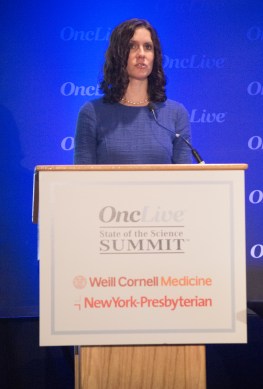
At the OncLive State of the Science Summit on Hematologic Malignancies, Dr. Sarah Rutherford provided an overview of two aggressive variations of B-cell lymphoma involving MYC and BCL-2 or BCL-6 that are characterized by resistance to chemotherapy: double-hit lymphoma and double protein-expressor lymphoma.

Double-hit lymphoma occurs due to alterations in two chromosomes involving MYC, BCL-2, and/or BCL-6, with the majority of cases involving MYC and BCL-2. This variant is fairly uncommon and has an incidence rate estimated at 5-10 percent of DLBCL cases, which can include instances in which patients’ follicular lymphoma transformed into DLBCL. Many double-hit lymphomas also tend to infiltrate sites outside the lymph nodes, such as the bone marrow and central nervous system.

According to Dr. Rutherford, outcomes for double-hit lymphomas are poor, even when intensive therapies like autologous stem cell transplant are added to treatment. Overall survival (OS) for double-hit lymphoma patients ranges between 5-24 months when treated with six cycles of R-CHOP, but dose-adjusted chemotherapy drug combination etoposide, prednisone, vincristine, cyclophosphamide, doxorubicin, and rituximab (DA-EPOCH-R) has become the standard frontline therapy for double-hit cases. DA-EPOCH-R is more intensive than the R-CHOP approach and appears to have improved outcomes, but data is still limited and new strategies are being planned to increase response rates in the double-hit patient population.

Double protein-expressor lymphomas have increased protein expression of MYC and BCL-2 or BCL-6 in the absence of the chromosomal changes seen in double-hit lymphomas. This variant is more common than double-hit lymphoma, with an incidence rate of about 30-40 percent of DLBCL cases, but it is not as difficult to cure. It is, however, more aggressive and has less favorable outcomes than classical DLBCL cases (those without changes in MYC, BCL-2, and BCL-6). The standard treatment for double protein-expressor lymphomas is six cycles of R-CHOP.

Dr. Rutherford said that the Lymphoma Program at Weill Cornell Medicine/NewYork-Presbyterian Hospital – along with other institutions, including Massachusetts General Hospital – is working hard to develop novel strategies that will improve outcomes for these patients. For example, the team currently has a multi-center investigator-initiated clinical trial open to determine the maximum tolerated dose of BCL-2 inhibitor venetoclax combined with DA-EPOCH-R. The goal is to then open a second clinical trial with an objective of evaluating the efficacy of this promising combination in the double-hit and double-expressor lymphoma population.

Watch Dr. Rutherford speak with OncLive about the discrepancy between double-hit and double protein-expressor lymphoma here: