
The American Society of Clinical Oncology (ASCO) Annual Meeting brings together more than 30,000 oncology professionals each year to encourage discourse on leading research, state-of-the-art treatments, and ongoing controversies in the field. At this year’s Annual Meeting in Chicago, our own Dr. Adrienne Phillips was selected to present a review of the current health disparities in lymphoma care.

According to the National Institute on Minority Health and Health Disparities, health disparities are defined as “differences in incidence, prevalence, morbidity, mortality and burden of diseases and other adverse health conditions that exist among specific population groups.”
Dr. Phillips explained that health disparities may be due to a variety of factors, including race, gender, biology, and social and environmental differences such as socioeconomic status, health literacy, trust in the healthcare system, proximity to a healthcare facility, and access to and type of health insurance. For example, being uninsured or receiving government-assisted insurance increases patients’ risk of death by 1.5 times. Even patients’ place of residence may play a role, with treatment in rural, community-based settings being associated with inferior overall survival (OS) rates compared to treatment in urban, academic-based settings.
What Dr. Phillips and other physicians find most disconcerting about disparity in lymphoma care is that the disease is often amenable to effective therapy, but a significant segment of the population does not, or cannot, access appropriate care. For example, survival rates for some lymphomas skew lower for black people than for white people. Dr. Phillips conjectured that while African Americans tend to have poorer outcomes, the disparity is likely due to issues related to healthcare access and socioeconomic status.
According to an analysis of 701 people with diffuse large B-cell lymphoma (DLBCL) treated at two southern referral centers with a large black patient population (University of Alabama at Birmingham and Emory University in Atlanta), race did not influence outcomes. Black and white patients who received standard DLBCL chemotherapy drug combination rituximab, cyclophosphamide, doxorubicin hydrochloride, vincristine sulfate, and prednisone (R-CHOP) achieved similar OS rates (5y OS, 79% vs 70%).
Biological factors may also play a role in health disparities, and scientists are constantly working to better understand molecular factors in tumor development regardless of patient ethnicity.
In general, lymphoma is less common among African Americans and Asian Americans, but specific subtypes – like T-cell lymphoma in African Americans and natural killer T-cell (NKT) lymphoma in Asian Americans – are more common in these populations. Thus, Dr. Phillips highlighted a need for ethnic and racial diversity in clinical trial recruitment and in future studies of socioeconomic status and disease biology in order to better understand and improve outcomes for all patients.
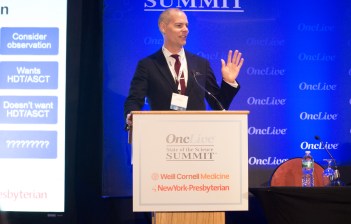 Citing a pattern of intensive mantle cell lymphoma (MCL) treatment regimens, Dr. Peter Martin – who co-chaired the OncLive State of the Science Summit on May 4, 2017, along with Dr. John Leonard – proposed that physician-researchers become more mindful of patient preferences when determining treatment regimens. He noted that some patients might prefer to receive more broadly accessible treatments and that those decisions may not significantly impact outcomes.
 Chimeric antigen receptor (CAR) T-cell therapy is an emerging form of immunotherapy that leverages the strength of a patient’s own immune system to fight cancer.
 New Developments in Lymphoma