New Clinical Trial: Phase 2 Study Evaluating the Efficacy/Safety of PQR309 in Patients with Relapsed/Refractory Lymphoma

The Weill Cornell Medicine Lymphoma Program has recently opened a new clinical trial for men and women with relapsed/refractory lymphoma. The study sponsor is PIQUR Therapeutics AG, and the principal investigator at Weill Cornell is Lisa Roth M.D. For more information about the study, please call Catherine Babaran, RN at 212-746-2651 or e-mail Catherine at cmb9017@med.cornell.edu.

Key Eligibility

  • Men and women age 18 and older with histologically confirmed diagnosis of relapsed or refractory lymphoma who have received at least two prior lines of therapy including immuno-chemotherapy. Patients with relapsed chronic lymphoid leukemia (CLL) are eligible if they have received one or more prior lines of any approved standard therapy.
  • Detailed eligibility reviewed when you contact the study team.

Study Summary

This clinical trial is for men and women with relapsed or refractory lymphoma. Despite conventional therapies, such as chemotherapy and radiation therapy, the treatment of lymphomas remains challenging, with the disease relapsing in many patients, which is subsequently more difficult to treat. The main goal of this study is to investigate the efficacy of PQR309 in patients with relapsed or refractory lymphomas. This is an open-label, non-randomized, multicenter phase 2 study with a safety run-in evaluating efficacy and safety of PQR309 in patients with relapsed or refractory lymphoma. There will be a safety run-in phase with up to 12 patients treated with 60 or 80 milligrams every day and then a Phase 2 expansion phase conducted with the highest dose level considered to be safe.  Patients will take 60 mg or 80 mg PQR309 orally once daily and will continue treatment as long as they are responding to therapy and not experiencing unacceptable side effects.

Lymphoma Researchers Receive LRF Grants to Investigate Potential New Treatments

Last week the Lymphoma Research Foundation (LRF) announced the awarding of $1.62 million in funding for lymphoma research and lymphoma related training grants. Among the awardees were two Lymphoma Program research collaborators, Dr. Leandro Cerchietti and Dr. Pilar Dominguez Rodriguez.

Leandro Cerchietti
Leandro Cerchietti, M.D.

Dr. Cerchietti is an Assistant Professor of Medicine and Raymond and Beverly Sackler Research Scholar at Weill Cornell Medicine. He received a grant from the LRF for his work in predicting follicular lymphoma transformation without biopsy. For follicular lymphoma (FL) patients their slow growing tumor can turn into a much more aggressive follicular lymphoma that limits their treatment options. The mechanisms behind these transformations are poorly understood, but researchers are trying to better understand the mechanism of transformation. Currently invasive and expensive biopsies are the only way to determine whether a patient is at risk for follicular transformation. Based on his previous research Dr. Cerchietti has determined that FL cells release certain products into a patient’s body, and that these products in the bloodstream can be used to anticipate FL transformation. Dr. Cerchietti plans to build on his previous research and potentially develop new non-chemotherapy treatments for follicular lymphoma.

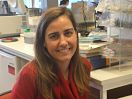
mariadelpilar
Pilar Dominguez Rodriguez, Ph.D.

Dr. Dominguez Rodriguez is a Post-Doctoral Associate, who specialized in cancer biology in Dr. Ari Melnick’s lab at Weill Cornell Medicine. Her current research focuses on the ten eleven translocation 2 (TET2) gene. TET2 is associated with DNA methylation, a process involved in the regulation of certain genes. Previously in patients with diffuse large B-cell lymphomas (DLBCL) the deregulation of DNA methylation has been identified as a source of DLBCL cell growth. However, researchers are still searching for answers as to why the methylation mechanisms malfunction. TET2 could potentially be a link due to its role in DNA methylation and the fact that is frequently mutated in lymphomas. Dr. Dominguez Rodriguez project seeks to discover whether there is a relationship between TET2 and DNA methylation in B-cells, and then identify how TET2 affects the development of DLBCL. If this relationship can be established the findings have the potential to identify new treatment targets for patients with B-cell lymphomas.

Ask the Doctor: Lisa Roth, MD on Lymphoma in Adolescents and Young Adults

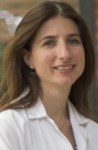
Lisa Roth, MD
Lisa Roth, MD

Every year nearly 70,000 adolescents and young adults (AYAs) are diagnosed with cancer in the United States. Of these, lymphoma is the most common. Teenagers and young adults with lymphoma have different needs than other cancer patients. Treatment can affect your education, career, fertility, and independence, which can be challenging for both patients and their families. Because of this, adolescents and young adults with lymphoma often feel lost – not quite fitting in at pediatric or adult treatment centers.

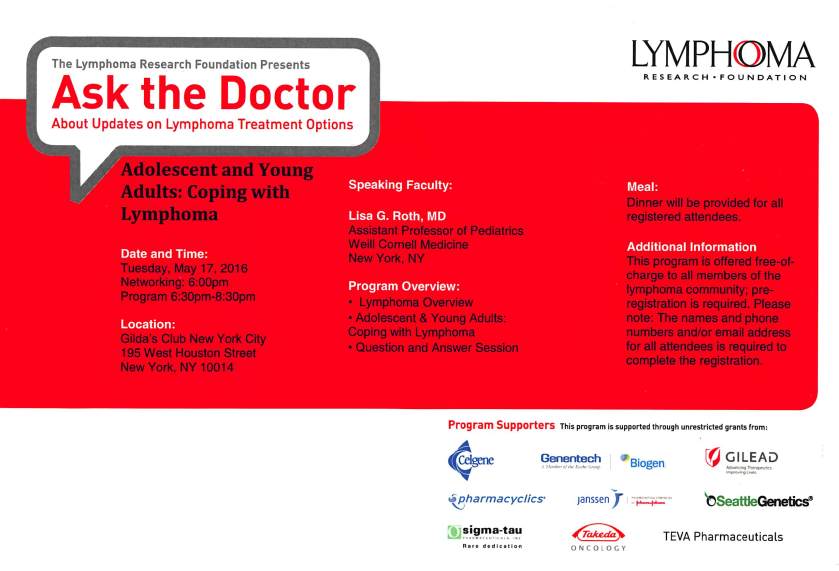
On May 17th at 6pm, Dr. Lisa Roth, Director of the Adolescent and Young Adult Lymphoma Program at Weill Cornell will present on the challenges faced by these patients. Her talk titled, “Updates on Lymphoma and Treatment Options for Adolescents and Young Adults”, is part of the Lymphoma Research Foundation’s, ‘Ask the Doctor Survivorship Program’.  This event will take place at Gilda’s Club, New York City.

Dr. Roth will answer questions and discuss the following topics:

  • How lymphoma is different for adolescents and young adults
  • Navigating treatment options
  • Understanding fertility preservation
  • Coping with side effects
  • Life after lymphoma treatment

This program is free-of-charge and dinner will be provided. Pre-registration is required. Full details are below:

Three Easy Ways to Register

Call: 800-500-9976
Email:  mspellman@lymphoma.org
Web: Click here

Roth YA Talk_Page_1