
Taking a Pie in the Face for Lymphoma

The results are in and the first annual Pie-in-the-face event was a smashing success! We raised $3500 for the  The Leukemia and Lymphoma Society as part of the 2016 Light The Night campaign.

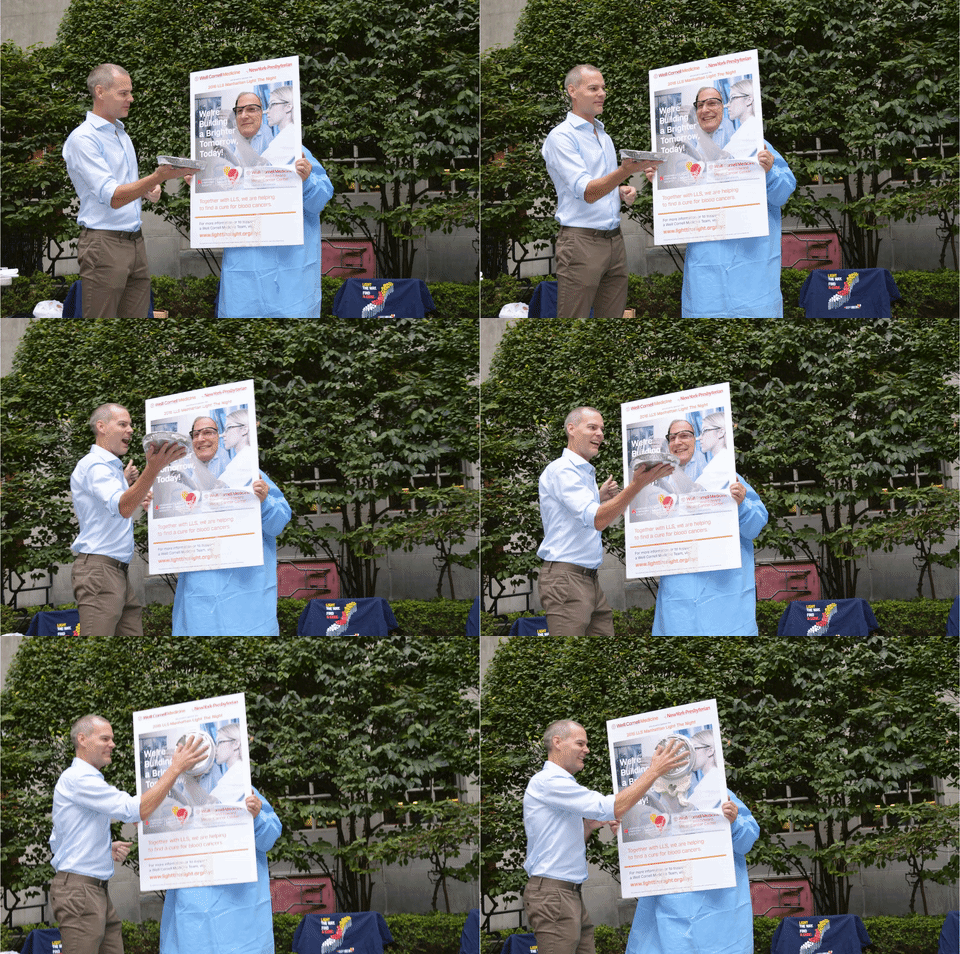
Obviously the highlight of the event was Lymphoma Program Director, Dr. John Leonard receiving a pie in the face from his esteemed colleague Dr. Peter Martin. Look at that fakeout!

Asked about his pie throwing heroics after the event Dr. Martin said, “Sometimes this job requires us to make tough decisions, like should I throw the pie with my left hand or right hand? At first I was nervous about throwing a pie at my boss…just kidding, it was awesome.”

http://gph.is/2cRTvNNgiphy

More pics of the event can be found here. Thanks to the Meyer Cancer Center & Englander Institute for Precision Medicine for organizing this event. Additional donations can be made on our Light the Night team page.

The FDA Fast Track Designation: A Primer

Picture1By Peter Martin, M.D.

The Fast Track Designation was introduced by the FDA in 1997 under the FDA Modernization Act. It was designed to speed up the development and review of drugs that treat serious conditions and fill an unmet medical need. Like all expedited designations, the Fast Track was designed to get new treatments into the hands of patients in need.

The Fast Track designation must be requested by the treatment’s sponsor. To determine whether a treatment warrants a Fast Track designation the FDA decides whether a drug shows promise in treating a serious condition or fills an unmet medical need. Determining whether a drug treats a condition that is “serious” is largely a subjective matter, but cancers including lymphoma are universally agreed upon to match the criteria of serious conditions. The factors the FDA will consider include the drug’s impact on survival, day-to-day functioning, and if left untreated, whether a less severe condition will turn into a more serious condition. An unmet medical need provides a treatment option to patients where no such option previously existed.

If other treatment options are already available then the treatment applying for the Fast Track designation must show superior effectiveness, avoid any major side effects found in currently available therapies, improve upon the diagnosis to show an improved outcome, or address an emerging or anticipated public health need.

Treatments that meet these criteria are eligible for more support from the FDA for their application process. If the relevant criteria is met they are also eligible for the accelerated approval and priority review designations.

Previous Entries in the Primer Series

The FDA Approval Process
The FDA Breakthrough Therapy Designation
The FDA Accelerated Approval Designation
The FDA Priority Review Designation

The FDA Priority Review Designation: A Primer

Picture1By Peter Martin, M.D.

Under the Prescription Drug User Act the FDA created a two-tiered system for review of new drug applications (NDA). The first tier of this system, known as Standard Review, is for treatments that offer a minor improvement over existing therapies, and sets the timeline to review at 10 months from receiving the NDA. The second tier, the Priority Review, is for drugs that offer major advances over existing therapies, or provide a treatment where none had previously existed, and reduces the approval timeframe of review to 6 months.

Significant improvements over pre-existing treatments include evidence of increased effectiveness in treatment, prevention, or diagnosis, reduction in treatment-limiting reactions, evidence of safety and effectiveness in a new patient population, and documented enhancement of patient compliance that is thought to lead to an improvement in serious outcomes.

Unlike other expedited approval programs with different levels of standards the Priority Review designation does not change the scientific or medical standards used for approval by the FDA. Instead more resources are devoted to expediting approval for the treatments that receive this designation because the FDA has decided chosen treatments serve a much greater need. To receive the Priority Review designation the FDA requires evidence of increased effectiveness in treatment prevention, or diagnosis of a condition.

Previous Entries in the Primer Series

The FDA Approval Process
The FDA Breakthrough Therapy Designation
THE FDA Accelerated Approval Designation