Dr. Lisa Roth Highlights Differences in Treatment Approaches for Pediatric Vs. Adult Hodgkin Lymphoma

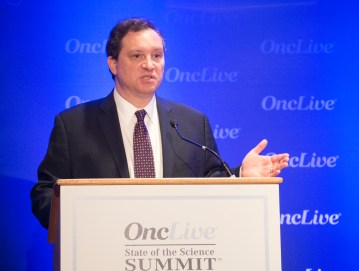
SOSS_Roth_FurmanAt OncLive’s State of the Science Summit on Hematologic Malignancies, Dr. Lisa Roth, head of the Adolescent and Young Adult (AYA) Lymphoma Program at Weill Cornell Medicine and NewYork-Presbyterian, outlined some of the differences in treatment approaches between pediatric and adult patients with Hodgkin lymphoma (HL), a cancer commonly diagnosed in young adults in their twenties.

According to the National Institutes of Health (NIH), patients between 15 and 39 years of age are considered part of the AYA population.

“A patient in this age range can walk into a pediatric oncologist’s office or a medical oncologist’s office and receive vastly different treatment for the exact same diagnosis,” said Dr. Roth, highlighting the medical landscape’s current lack of and need for research in order to understand how to optimize care for AYA patients.

To compare and contrast the approaches, Dr. Roth broke down the components of the pediatric and adult treatment regimens for a standard case of Hodgkin lymphoma.

A HL patient treated under the pediatric regimen would typically receive four cycles of the chemotherapy drug combination doxorubicin hydrochloride, bleomycin, vincristine sulfate, etoposide phosphate, prednisone, and cyclophosphamide (ABVE-PC) over 12 weeks, as compared to the adult regimen of six cycles of chemotherapy drug combination doxorubicin hydrochloride, bleomycin, vinblastine sulfate, and dacarbazine (ABVD) over 24 weeks. About half of pediatric patients would receive radiation following ABVE-PC while very few adult patients would receive the same following ABVD.

Compared to its adult counterpart, the pediatric regimen has lower cumulative exposure to anthracycline, a drug class associated with cardiac toxicity that includes doxorubicin, as well as a lower dosage of bleomycin, a drug associated with pulmonary toxicity.

On the other hand, the adult ABVD regimen does not contain drugs etoposide or cyclophosphamide, both of which are associated with risk of secondary malignancies and infertility.

Dr. Roth explained that outcome improvements in adolescent and young adult patients are lagging behind those in both pediatric and adult populations – a disparity partially connected to the deficit of clinical and translational research focusing specifically on this age group. Other contributing factors may relate to differences in tumor biology in the AYA group that doctors do not yet fully understand, as well as the group’s tendency to delay physician consultation and to have limited healthcare access due to being under or uninsured.

Because the AYA population has such unique needs, they require a multidisciplinary team to guide them through each stage of their treatment process. The Weill Cornell Medicine/NewYork-Presbyterian Adolescent and Young Adult Lymphoma Program is composed of pediatric and medical oncologists, radiation oncologists, bone marrow transplant experts, fertility preservation specialists, and psychologists and social workers. The team also includes physicians who specialize in survivorship to allow for seamless care from treatment to beyond, which is specifically relevant for patients of this age range who are very likely to have many years of life to look forward to once cured of their disease.

WCM’s AYA Lymphoma Program is working hard to expand pediatric patients’ access to upcoming clinical trials and to develop trials specific to the AYA population.

For more from Dr. Roth on the intricacies of treating the AYA population, watch this video courtesy of OncLive:
A Reflection on National Cancer Survivor Day: “I’m Cancer-Free, But I Don’t Like the Word ‘Survivor’”

By Katie DeMasi

Today, June 4th, is National Cancer Survivor Day. Personally, I’m not totally in love with the word “survivor.” Maybe it’s because I’m new to this whole thing. It’s only been a little less than two months since I was told I’m cancer free. When I think about survivors, I think about plane crashes or that show on TV. I think about luck. I didn’t beat cancer because I was lucky or because no one decided to vote me off the island. I beat cancer with the help of my healthcare team, especially everyone at Weill Cornell Medicine and NewYork-Presbyterian Hospital, modern day medicine, and positivity.

KatieDeMasi_lastchemo
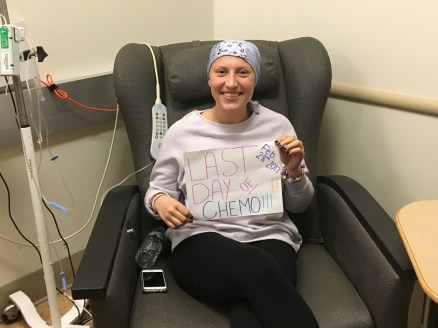
Here I am on my last day of chemotherapy.

This is all just my opinion, and maybe as I get older and time goes on, I will understand survivorship in the face of cancer. Nonetheless, today is a day to commemorate those who have won their battles and to remember those who aren’t with us. It is a day of not only celebration, but also reflection.

I often think about what my life was supposed to be before I was diagnosed with Hodgkin lymphoma last August. I was supposed to be starting a job as a new nurse in New York City. I was supposed to move out of my childhood home. I was supposed to be living my life like any normal post-graduate. But to be honest, I’m kind of sick of talking about that. I’m more interested in what my life is and will be. I like to think about how my experience with cancer has changed me as a person. I think about what I have overcome and just how I did it.

I have learned the true meaning of the expression “YOLO” (You only live once.) and have included the word “yes” a lot more in my day-to-day life. And not just in the instances where it’s like, “Do you want to get ice cream?” or “Do you want to leave work early?” because those answers always have been and always will be “yes.”

I’m talking more about attitude and experiences. I can say with my whole heart that I have become a more positive person because of what I’ve been through, which might sound weird to some people. Why would something that was pretty awful cause me to have a better outlook on life? Well, it’s because I’m still here. Duh.

Chemo is bad. It is not fun. It is the enemy. But you know what they say: “Keep your friends close and your enemies closer.” So instead of complaining about having to wake up early to sit in traffic just to get to the hospital, and then get chemo dumped into my body, and then feel like a zombie for the next couple of days, I said “yes.” Yes, I can do this. Yes, I can get through this. Yes, I will take that Ativan before I leave the hospital so I can sleep in the car on the way home.

And now that chemo is done and has left me with a taste aversion to cranberry turkey wraps (I know, specific, but I ate one while getting chemo once and just the thought of it is making me gag.), I have carried over my “yes” attitude into my every day life.

I love sitting on the couch in my sweatpants binge-watching Netflix as much as the next girl, but there is a lot to do and see in this world. In this life. I’m not saying I plan on never working again and travelling the world (even though if I won the lottery today, I would probably be on a plane to somewhere new tomorrow); I’m talking about taking advantage of a beautiful day. Spending it outside instead of being cooped up all day. Doing something I’ve never done before, like going to a music festival or paddle boarding. Trying a new menu item at a restaurant I’ve been to a million times. Trying a new restaurant all together. Meeting new people. Spending time with family and friends and really being present.

KatieDeMasi_hotdog
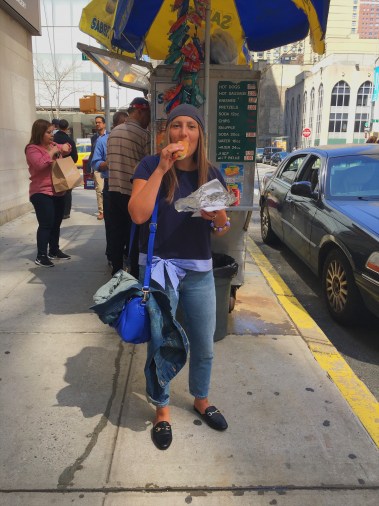
Here I am outside of NYP after I got my clear scan results, eating my first hot dog in six months. Again, it’s the little things.

It’s the little things that I am saying yes to now. Things that maybe I would have ignored or pushed off before. I have stopped thinking about what the plan for my life was and started to think about what the plan is. Life threw me lemons even though I planned on making orange juice. So what did I do? I took those lemons and made a lot of lemonade during chemo because it really seemed to help with the nausea.

I can wish I never had cancer all I want, but that’s not going to change the fact that I had it. So, I have changed my attitude and learned to appreciate what I have now, turkey wrap taste aversion, lemons, and all.

Dr. Richard Furman Examines Future of CLL Risk Assessment

At OncLive’s State of the Science Summit on Hematologic Malignancies, Dr. Richard Furman, director of the Chronic Lymphocytic Leukemia (CLL) Research Center at Weill Cornell Medicine, discussed how medical oncologists should be using prognostic markers to make risk assessments in order to determine individualized treatments for their patients with CLL.

SOSS_Richard_FurmanDr. Furman noted that current CLL therapies are effective, but they often lead to complications. CLL patients treated with standard chemotherapy drug combination fludarabine, cyclophosphamide, rituximab (FCR) are often prone to developing treatment resistance or Richter’s transformations (RT), in which their CLL transforms into a more aggressive diffuse large B-cell lymphoma (DLBCL). They may also succumb to infectious complications, adverse events, or secondary malignancies.

Because of the risks associated with FCR treatment, Dr. Furman suggested a movement toward treatment agents that are not as toxic, such as ibrutinib. But even with ibrutinib, patients can develop resistance to treatment. For example, in cysteine481-to-serine mutations, the amino acid in Bruton’s tyrosine kinase (BTK) that ibrutinib binds to is changed from a cysteine to a serine, prohibiting ibrutinib from continuing to bind. This results in inadequate ibrutinib coverage and enables CLL cells to escape treatment and survive.

According to Dr. Furman, a large number of CLL patients will have excellent responses and enjoy very long progression free survivals. What is important is to identify those who will not and to devise a treatment strategy that can improve their outcomes. Currently, interphase FISH (demonstrating deletion 11q or 17p), NOTCH1 mutation, or certain V genes help identify those patients who will progress on currently novel agents or have a risk of Richter’s transformation. In the future, stimulated karyotyping, or evaluating changes in the chromosomes after stimulation of the CLL cells, will also be of great importance.

The CLL team at Weill Cornell Medicine and NewYork-Presbyterian is currently investigating an early intervention trial in which patients at risk of developing Richter’s transformation or resistance to BTK inhibitors receive intervention before the mutations have a chance to develop. Our team is also looking into the use of combination therapies, such as ibrutinib and venetoclax, in treatment of CLL patients.

Additionally, Dr. Furman pointed out that prognostic markers are dependent upon the setting in which they’re used. Those used for FCR, such as minimal residual disease (MRD), don’t necessarily apply to ibrutinib. He said that prognostic markers are traditionally based upon responses, but we now need to start looking at them from a progression-free survival (PFS) perspective.

To hear more from Dr. Furman about the outlook of CLL prognostic markers, check out this short OncLive clip: