ICML Update: Lenalidomide and Rituximab Are Well Tolerated and Effective in Patients with Previously Untreated Follicular Lymphoma

On June 20, at the 12th International Conference on Malignant Lymphoma, Dr. Peter Martin presented preliminary results from the CALGB-sponsored phase II study of oral lenalidomide plus rituximab in patients with previously untreated follicular lymphoma. Although preliminary, the overall and complete response rates were promising (93% and 72%, respectively) and the regimen was well tolerated. Moreover, these results are comparable to standard chemotherapy-containing regimens and provide rationale for further development of non-chemotherapy treatments for patients with follicular lymphoma. Shortly we will begin conducting a trial of lenalidomide, rituximab, and ibrutinib in patients with previously untreated follicular lymphoma and hope to improve even further on these results.

Please look back to this space for further updates regarding future trials with lenalidomide, rituximab, and ibrutinib.
ASCO 2013: Idelalisib Effective in Combination Therapy for Indolent non-Hodgkin Lymphoma

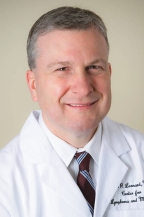
Frequently Asked QuestionsBy John P. Leonard, MD

Idelalisib (previously called CAL-101 and GS-1101) is a first-in-class selective, oral inhibitor of the PI3K-delta enzymes that while essential to the process of activation, proliferation, and survival of B cells, is also hyperactive in B-cell malignancies. The treatment has previously shown considerable promise as a both a monotherapy and a combination therapy in recurrent non-Hodgkin lymphoma and a variety of other lymphomas.

At the recent annual meeting of the American Society of Clinical Oncology in Chicago, I presented updated results from a recent combination therapy study, contrasting the tolerability and activity of the PI3K-inhibitor idelalisib with rituximab and/or bendamustine in patients with previously treated indolent non-Hodgkin lymphoma.  From the 78 patients there was an overall response rate (ORR) was 81% with a complete response (CR) of 28%. The ORR/CR for idelalisib/rituximab was 77%/20%, idelalisib/bendamustine 85%/29%, and idelalisib/bendamustine/rituximab 79%/43%, with a progression free survival of 73% after 20 months.

The study concluded that idelalisib-based combination therapy deserves further clinical development as this combination therapy is highly active and well tolerated in patients with relapsed/refractory indolent non-Hodgkin lymphoma.

For a full listing of all current clinical trials underway in the Lymphoma Program, please click here.

ASCO 2013: Ibrutinib Combined with R-CHOP Shows Positive Results in Patients with CD20-positive, B-cell non-Hodgkin Lymphoma

jruan

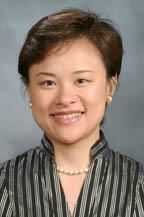
By Jia Ruan, MD, PhD

Ibrutinib is a first-in-class oral Bruton’s tyrosine kinase inhibitor that has shown promise in treating a variety of relapsed and refractory B-cell malignancies. At the 2013 meeting of the American Society of Clinical Oncology in Chicago, Dr. Anas Younes of the MD Anderson Cancer Center presented results from a recent phase 1b trial combining ibrutinib with standard doses of R-CHOP in patients with previously untreated CD20 positive NHL (NCT01569750).

A total of seventeen patients were enrolled, including those with subtypes of diffuse large B-cell lymphoma, mantle cell lymphoma, and follicular lymphoma. The recommended phase 2 dose of ibrutinib was established at 560 mg daily in combination with standard doses of R-CHOP given every 21 days.  The overall response rate of treatment was 100% with 7 complete and 3 partial responses in 10 evaluable patients. The most common adverse events were neutropenia (77%), thrombocytopenia (65%), vomiting (59%), anemia (53%), nausea (47%), fatigue (35%), headaches (29%), constipation (24%), diarrhea (24%), and dizziness (24%).

The study concluded that this novel combination of Ibrutinib and R-CHOP has an acceptable and expected safety profile.  An expansion cohort 560 mg ibrutinib is being opened to further explore the safety and efficacy of IR-CHOP in patients with newly diagnosed diffuse large B-cell lymphomas.

For a full listing of all current clinical trials underway in the Lymphoma Program, please click here.