
Clinical Trial Participation May Improve Outcomes for Patients with Lymphoma

Picture1By Peter Martin, M.D.

Recently researchers from the Mayo Clinic presented data at the 2016 ASCO annual meeting suggesting that clinical trial participation might be associated with a survival benefit. The researchers used the Mayo Clinic Lymphoma Database to identify patients with relapsed Hodgkin lymphoma (HL), diffuse large B-cell lymphoma (DLBCL), or relapsed mantle cell lymphoma (MCL), and compared the characteristics and outcomes of those enrolled in clinical trials versus those who were eligible, but not enrolled in clinical trials. Between January 2001 and December 2014, 340 patients with DLBCL, 159 with MCL, and 115 patients with HL were identified. Over this same period 47 unique Phase 1-3 trials led to the FDA approval of 17 treatments.

94 of 340 (27%) DLBCL, 63 of 159 (41%) MCL and 66 of 115 (57%) HL patients were enrolled on a clinical trial at some point during therapy, with 38% of patients enrolled in more than 1 study. Researchers found that the median survival of patients treated in a clinical trial was roughly twice as long as patients not treated on a clinical trial in all 3 lymphoma subtypes. There are several possible sources of bias or confounding that might explain the difference, despite the researchers’ efforts to control for these variables. Clearly, more research in this areas is indicated. Nonetheless, the magnitude of benefit was striking and should be reassuring to patients considering clinical trial participation.
New Clinical Trial: A Phase 1/2 Study to Assess the Safety & Tolerability of Durvalumab as Monotherapy & in Combination Therapy in Subjects with Lymphoma or CLL

The Weill Cornell Medicine Lymphoma Program has recently opened a new clinical trial for men and women with relapsed/refractory lymphoma or relapsed/refractory chronic lymphocytic leukemia (CLL). The study sponsor is Celgene International, and the principal investigator at Weill Cornell is Jia Ruan, M.D., Ph.D. For more information about the study, please call Catherine Babaran, RN at 212-746-2651 or e-mail Catherine at cmb9017@med.cornell.edu.

Key Eligibility

  • Men and women age 18 years and older.
  • Patients with relapsed/refractory lymphoma or relapsed/refractory CLL previously treated with at least one systemic therapy.
  • Detailed eligibility reviewed when you contact the study team.

Study Summary

This clinical trial is for men and women with relapsed/refractory lymphoma or relapsed/refractory chronic lymphocytic leukemia (CLL) previously treated with at least one systemic therapy.

The purpose of this study is to test the safety and effectiveness, as well as to define the appropriate dose and schedule of an investigational drug and investigational combinations of drugs. Durvalumab is an antibody (a protein that works with your immune system) that attaches to a molecule known as “programmed-cell-death ligand 1” (PD-L1). Signals from PD-L1 help cancers avoid detection by the immune system. Durvalumab blocks these signals, interfering with the cancer’s ability to escape the immune system.

The study will consist of 3 parts: dose findings, dose confirmation, and dose expansion. Four treatment arms will be investigated:

  • Arm A (durvalumab plus lenalidomide and ritxuimab)
  • Arm B (durvalumab plus ibrutinib)
  • Arm C (durvalumab plus bendamustine and rituximab)
  • Arm D (durvalumab monotherapy)

Study subjects will receive treatment for approximately one year and be in follow-up for anywhere from two to five years after treatment.

During each 28-day treatment cycle, subjects will receive durvalumab infusion on Day 1 of Cycles 1 through 13 at a fixed dose of 1500 mg every 4 weeks in combination with:

  • Arm A: Lenalidomide orally once daily on Days 1 to 21 of each cycle for 12 months or until disease progression plus rituximab infusion on Days 2, 8, 15 and 22 of Cycle 1 and on Day 1 of Cycles 2 through 5.
  • Arm B: Ibrutinib continuous, once daily until disease progression.
  • Arm C: Bendamustine infusion on Days 1 and 2 of Cycles 1 through 6 plus rituximab infusion on Day 2 of Cycles 1 through 6.
  • Arm D: Durvalumab monotherapy arm.

Pounding the Pavement for a Cause that Hits Home

As the Director of the Adolescent and Young Adults (AYA) Lymphoma Program, Dr. Lisa Roth has a unique ability to empathize with her patients. Three years ago, Dr. Roth herself was diagnosed with lymphoma. As an oncologist, she was used to confronting cancer every day, but never on such a deeply personal level. Not unlike many of her patients, she went from being young and healthy to facing a life-threatening illness with no warning.

After successfully undergoing chemotherapy, Dr. Roth’s lymphoma was in remission and she made running part of her recovery process. Six months after finishing cancer treatment, she ran her first race in the New York Road Runners Mini 10K.

LR RR
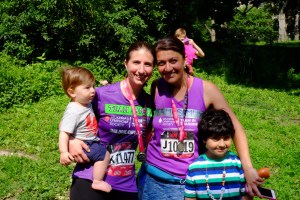
(L-R) Dr. Lisa Roth and her son Zachary with Mana and Sammy after the 2016 Mini 10K.

Last weekend Dr. Roth returned to run the 2016 Mini 10K, but this year she was running for one of her precocious pediatric patients.

For Sammy, a six-year-old who has been battling leukemia for almost two years, his days are filled with not only play dates, ninjas and superheroes, but also routine visits to Weill Cornell and NewYork Presbyterian Hospital for chemotherapy and other procedures related to his diagnosis.

“Sammy and his family are a true inspiration,” says Roth. As part of “Team Sammy” Dr. Roth, along with Sammy’s mom Mana and a team of 12 people, ran the 10K and raised nearly $18,000 for the Leukemia and Lymphoma Society, proving you don’t need superpowers to make a difference in the fight against blood cancer.

For Dr. Roth, it’s also personal. “This was my first race as a new mom. I owe my life and opportunity to be a mom to research funded by groups like the Leukemia & Lymphoma Society,” says Roth.

Learn more about Dr. Roth and Team Sammy, as they were recently featured on the New York Road Runners website.