

Idelalisib is a first in class, selective, oral inhibitor of PI3Kδ approved by the FDA for the treatment of chronic lymphocytic leukemia (CLL) in combination with rituximab and as a monotherapy for patients with follicular lymphoma, who have received at least two prior systemic therapies. A recent study sought to analyze the safety profile of idelalisib in 760 subjects with heavily pre-treated and relapsed CLL, non-Hodgkin lymphoma, and other B-cell malignancies, who received idelalisib alone or as part of a combination therapy. Side effects leading to changes in dosing included transaminase elevations (13%), diarrhea/colitis (11%), and rash. Side effects leading to discontinuation of treatment were rare. Patient’s whose dose was interrupted due to adverse events were frequently able to tolerate dosing upon re-challenge. These data demonstrate that idelalisib was well tolerated in patients as a monotherapy or in combination.
Tag: cancer treatment
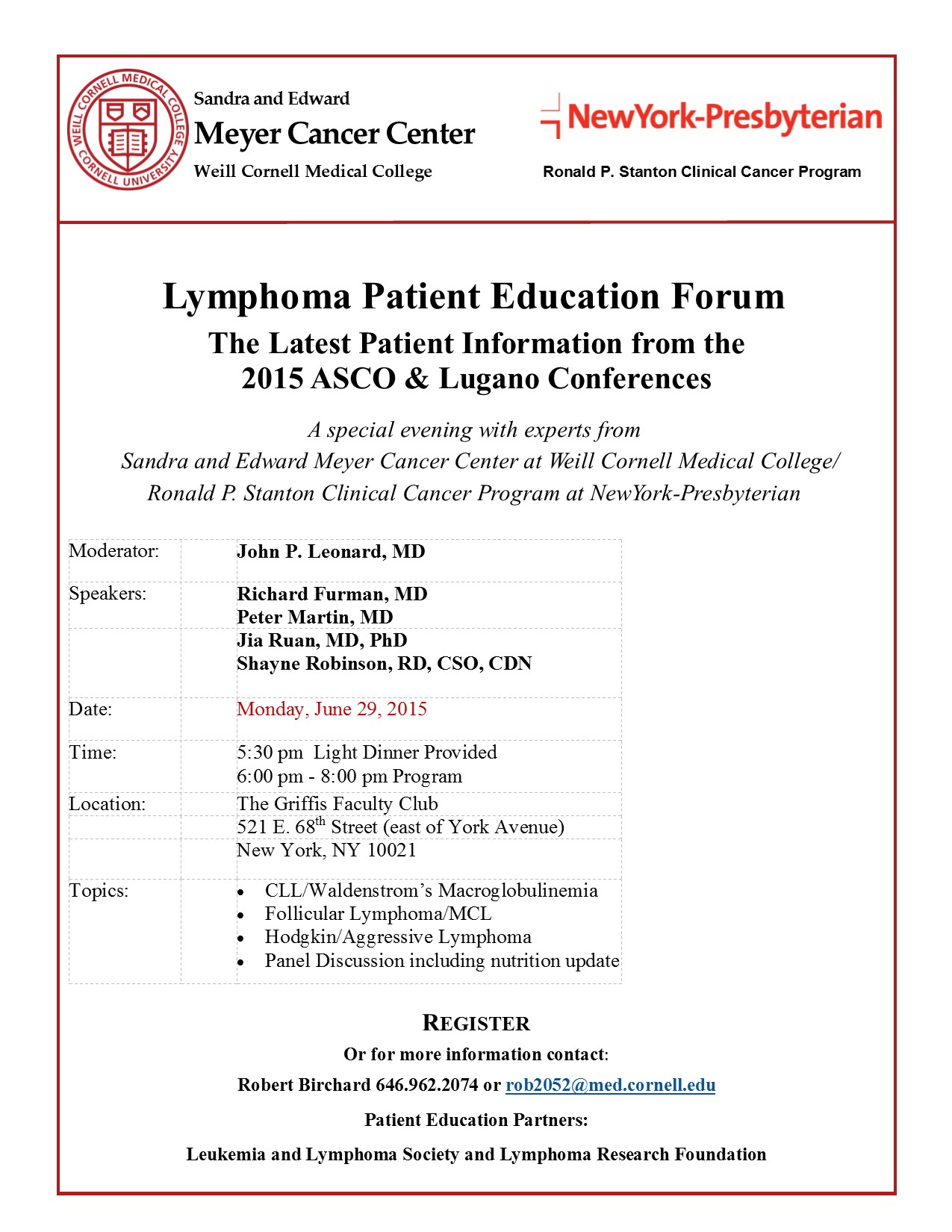
Lymphoma Patient Education Forum – June 29th
The Lymphoma Program at Weill Cornell Medical College invites you to hear from our experts about the latest advances in lymphoma treatment & nutrition:
REDLAMP 5: Rituximab vs. Watch & Wait Approach in Patients with Advanced Follicular Lymphoma
Conventional therapy for patients with advanced stage, low tumor burden follicular lymphoma can include watchful waiting until the disease progresses. In this video Dr. Kelly Trevino explains the findings of a study in Lancet Oncology that assessed the difference in quality of life for patients who used rituximab to delay chemotherapy treatment and those patients who took the watchful wait approach.
Previous #REDLAMP entries can be viewed on our Youtube channel.
We encourage you to follow the Lymphoma Program on Twitter, Youtube, and Facebook where we will highlight new videos are about research publications as they are released. We also welcome your feedback, suggestions and questions about this project. If you have other questions about our lymphoma program or clinical trials or would like to see one of our lymphoma specialists, please contact us at 646-962-2074.
 New Developments in Lymphoma