A Reflection on National Cancer Survivor Day: “I’m Cancer-Free, But I Don’t Like the Word ‘Survivor’”

By Katie DeMasi

Today, June 4th, is National Cancer Survivor Day. Personally, I’m not totally in love with the word “survivor.” Maybe it’s because I’m new to this whole thing. It’s only been a little less than two months since I was told I’m cancer free. When I think about survivors, I think about plane crashes or that show on TV. I think about luck. I didn’t beat cancer because I was lucky or because no one decided to vote me off the island. I beat cancer with the help of my healthcare team, especially everyone at Weill Cornell Medicine and NewYork-Presbyterian Hospital, modern day medicine, and positivity.
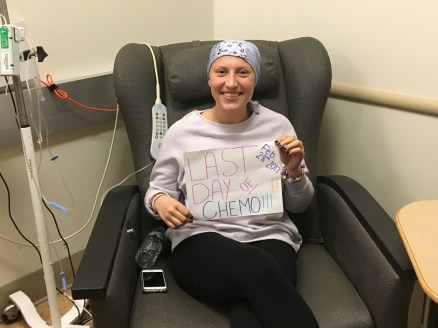
KatieDeMasi_lastchemo
Here I am on my last day of chemotherapy.

This is all just my opinion, and maybe as I get older and time goes on, I will understand survivorship in the face of cancer. Nonetheless, today is a day to commemorate those who have won their battles and to remember those who aren’t with us. It is a day of not only celebration, but also reflection.

I often think about what my life was supposed to be before I was diagnosed with Hodgkin lymphoma last August. I was supposed to be starting a job as a new nurse in New York City. I was supposed to move out of my childhood home. I was supposed to be living my life like any normal post-graduate. But to be honest, I’m kind of sick of talking about that. I’m more interested in what my life is and will be. I like to think about how my experience with cancer has changed me as a person. I think about what I have overcome and just how I did it.

I have learned the true meaning of the expression “YOLO” (You only live once.) and have included the word “yes” a lot more in my day-to-day life. And not just in the instances where it’s like, “Do you want to get ice cream?” or “Do you want to leave work early?” because those answers always have been and always will be “yes.”

I’m talking more about attitude and experiences. I can say with my whole heart that I have become a more positive person because of what I’ve been through, which might sound weird to some people. Why would something that was pretty awful cause me to have a better outlook on life? Well, it’s because I’m still here. Duh.

Chemo is bad. It is not fun. It is the enemy. But you know what they say: “Keep your friends close and your enemies closer.” So instead of complaining about having to wake up early to sit in traffic just to get to the hospital, and then get chemo dumped into my body, and then feel like a zombie for the next couple of days, I said “yes.” Yes, I can do this. Yes, I can get through this. Yes, I will take that Ativan before I leave the hospital so I can sleep in the car on the way home.

And now that chemo is done and has left me with a taste aversion to cranberry turkey wraps (I know, specific, but I ate one while getting chemo once and just the thought of it is making me gag.), I have carried over my “yes” attitude into my every day life.

I love sitting on the couch in my sweatpants binge-watching Netflix as much as the next girl, but there is a lot to do and see in this world. In this life. I’m not saying I plan on never working again and travelling the world (even though if I won the lottery today, I would probably be on a plane to somewhere new tomorrow); I’m talking about taking advantage of a beautiful day. Spending it outside instead of being cooped up all day. Doing something I’ve never done before, like going to a music festival or paddle boarding. Trying a new menu item at a restaurant I’ve been to a million times. Trying a new restaurant all together. Meeting new people. Spending time with family and friends and really being present.
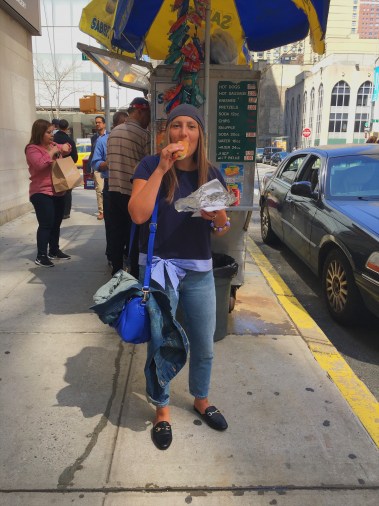
KatieDeMasi_hotdog
Here I am outside of NYP after I got my clear scan results, eating my first hot dog in six months. Again, it’s the little things.

It’s the little things that I am saying yes to now. Things that maybe I would have ignored or pushed off before. I have stopped thinking about what the plan for my life was and started to think about what the plan is. Life threw me lemons even though I planned on making orange juice. So what did I do? I took those lemons and made a lot of lemonade during chemo because it really seemed to help with the nausea.

I can wish I never had cancer all I want, but that’s not going to change the fact that I had it. So, I have changed my attitude and learned to appreciate what I have now, turkey wrap taste aversion, lemons, and all.

New Immunotherapy Treatment Approved for Children and Adults with Hodgkin Lymphoma

On March 14, 2017, the Food and Drug Administration (FDA) approved pembrolizumab for the treatment of refractory Hodgkin lymphoma in children and adults who have been treated with at least three prior therapies.

Pembrolizumab is a type of immunotherapy called a checkpoint inhibitor. This drug consists of an antibody that binds to programmed death receptor-1 (PD-1), preventing the cancer cells from evading detection by the body’s immune system. Treatment with pembrolizumab allows T-cells (the fighter cells) to mount an immune response against the malignant cells.

Since 2014, Pembrolizumab has been FDA approved for the treatment of unresectable or metastatic melanoma, metastatic non-small-cell lung cancer, and recurrent or metastatic head and neck squamous cell carcinoma. The approval of pembrolizumab for the treatment of relapsed Hodgkin lymphoma was made under the FDA’s accelerated approval process.

This approval was based on data from a clinical trial of pembrolizumab in 210 adult patients with Hodgkin lymphoma who had relapsed or refractory disease after autologous stem cell transplant and/or treatment with brentuximab vedotin.  With a median follow up of 9.4 months, the overall response rate was 69%, including partial responses in 47% and complete responses in 22% of patients. The approval in pediatrics was based on known safety data and extrapolated efficacy based on the adult trial.

The most common adverse events in the trial were fatigue, fever, cough, musculoskeletal pain, diarrhea, and rash. Among 40 pediatric patients with advanced melanoma, PD-L1 positive tumors, or lymphoma, the side effects and overall safety profile was similar to adults.  A “warning and precaution” was added to the label describing the potential complications of graft-versus-host disease (GVHD) in patients undergoing allogeneic stem cell transplant after treatment with pembrolizumab.  Death related to GVHD has occurred and physicians are advised to monitor for hepatic veno-occlusive disease and grade 3-4 acute GVHD including hyperacute GVHD.

The recommended dose of pembrolizumab for patients with Hodgkin lymphoma is 200mg every 3 weeks in adults and 2mg/kg (up to 200mg) every 3 weeks in children.

At the Weill Cornell and NewYork-Presbyterian Lymphoma Program, we offer pembrolizumab as one of many treatment choices available for people with Hodgkin lymphoma.

Weill Cornell Medicine – 2016 ASH Abstracts

2016 has been another productive year for research in the Lymphoma Program at Weill Cornell Medicine. Listed below are the abstracts we were involved in whole or in part to be presented at this year’s 58th Annual Meeting of the American Society of Hematology (ASH).

Look to this space for more information about developments during the ASH meetings this December 3-6.

CLL/SLL

60 – Acalabrutinib Monotherapy in Patients with Richter Transformation from the Phase 1/2 ACE-CL-001 Clinical Study

188 – The Landscape of Dynamic Genetic Changes in Ibrutinib-Treated CLL

192 – Outcome of Patients with Complex Karyotype in a Phase 3 Randomized Study of Idelalisib Plus Rituximab for Relapsed Chronic Lymphocytic Leukemia

233 – Five-Year Experience with Single-Agent Ibrutinib in Patients with Previously Untreated and Relapsed/Refractory Chronic Lymphocytic Leukemia/Small Lymphocytic Leukemia

304 – Targeting Cellular Metabolism and Survival in Chronic Lymphocytic Leukemia and Richter Syndrome Cells By a Novel NF-Kb Inhibitor

621 – Phase 1 Study of REGN1979, an Anti-CD20 x Anti-CD3 Bispecific Monoclonal Antibody, in Patients with CD20+ B-Cell Malignancies Previously Treated with CD20-Directed Antibody Therapy

638 – Acalabrutinib Monotherapy in Patients with Ibrutinib Intolerance: Results from the Phase 1/2 ACE-CL-001 Clinical Study

642 – Venetoclax (VEN) Monotherapy for Patients with Chronic Lymphocytic Leukemia (CLL) Who Relapsed after or Were Refractory to Ibrutinib or Idelalisib

969 – Mutations in NOTCH1 PEST Domain Orchestrate CCL19-Driven Homing of Chronic Lymphocytic Leukemia (CLL) Cells By Modulating the Tumor Suppressor Gene DUSP22

1047 – Single Cell Bisulfite Sequencing Defines Epigenetic Diversification in Chronic Lymphocytic Leukemia

3705 – A Retrospective Analysis of Pneumocystis Jirovecii Pneumonia Infection in Patients Receiving Idelalisib in Clinical Trials

4349 – FAT1 Mutations Influence Time to First Treatment in Untreated CLL

Diffuse Large B-Cell Lymphoma

469 – Phase III Randomized Study of R-CHOP Versus DA-EPOCH-R and Molecular Analysis of Untreated Diffuse Large B-Cell Lymphoma: CALGB/Alliance 50303

473 – A Multicenter Open-Label, Phase 1b/2 Study of Ibrutinib in Combination With Lenalidomide and Rituximab in Patients With Relapsed or Refractory (R/R) Diffuse Large B-Cell Lymphoma (DLBCL)

734 – EZH2 Enables the Proliferation of Germinal Center B Cells and DLBCL through a Rb-E2F1 Positive Feedback Loop Involving Repression of CDKN1A

837 – RNA Interference Screen Implicates TNFAIP3 and FOXO1 in MALT1 Inhibition Resistance

1045 – AICDA Introduces Epigenetic Plasticity in Germinal Center-Derived Lymphomas and Accelerates Lymphomagenesis

1087 – Integrative Genetic and Clinical Analysis through Whole Exome Sequencing in 1001 Diffuse Large B Cell Lymphoma (DLBCL) Patients Reveals Novel Disease Drivers and Risk Groups

3045 – Ribavirin, an eIF4E Inhibitor, As a Potential Anti-Lymphoma Therapeutic – Preclinical and Early Clinical Data

Follicular Lymphoma

616 – Continued Excellent Outcomes in Previously Untreated Follicular Lymphoma Patients after Treatment with CHOP Plus Rituximab or CHOP Plus (131) Iodine-Tositumomab – Long Term Follow-up of Phase III Randomized Study SWOG S0016

1217 – Ibrutinib As Treatment for Chemoimmunotherapy-Resistant Patients with Follicular Lymphoma: First Results from the Open‑Label, Multicenter, Phase 2 DAWN Study

1804 – Ibrutinib Combined with Rituximab in Treatment-Naive Patients with Follicular Lymphoma: Arm 1 + Arm 2 Results from a Multicenter, Open-Label Phase 2 Study

2953 – Early Relapse of Follicular Lymphoma after Rituximab-Based Biologic Doublet Upfront Therapy Is Associated with Increased Risk of Death: A Combined Analysis from CALGB Studies 50402, 50701 and 50803 (Alliance)

Hodgkin Lymphoma

924 – Subsequent Malignant Neoplasms Among Children and Adolescents with Hodgkin Lymphoma Treated with Response-Adapted Therapy: A Report from the Children’s Oncology Group Study AHOD0031

2949 – Hodgkin Lymphoma Patients Demonstrate Evidence of Systemic Perturbation of the Monocyte-Dendritic Cell Axis

3502 – Outcomes of Allogeneic Hematopoietic Stem Cell Transplantation (HSCT) after Treatment with Nivolumab for Relapsed/Refractory Hodgkin Lymphoma

4088 – CD25 Enables Oncogenic BCR Signaling and Represents a Therapeutic Target in Refractory B Cell Malignancies

Mantle Cell Lymphoma

150 – A Phase I Trial of Ibrutinib Plus Palbociclib in Patients with Previously Treated Mantle Cell Lymphoma

610 – PIK3IP1 Inhibition of PI3K in G1 Arrest Induced By CDK4 Inhibition Reprograms MCL for Ibrutinib Therapy

1096 – Lymphoid-like Environment, Which Promotes Proliferation and Induces Resistance to BH3-Mimetics, Is Counteracted By Obinutuzumab in MCL:  Biological Rationale for the Oasis Clinical Trial

1786 – Effectiveness of Lenalidomide in Patients with Mantle Cell Lymphoma Who Relapsed/Progressed after or Were Refractory/Intolerant to Ibrutinib: The MCL-004 Study

2937 – PRMT5 Targets Tumor Suppressor Micro RNAs to Regulate Cyclin D1 and c-MYC in Mantle Cell Lymphoma

Non-Hodgkin Lymphoma

536 – Toxicities and Related Outcomes of Elderly Patients (pts) (≥65 Years) with Hematologic Malignancies in the Contemporary Era (Alliance A151611)

756 – Molecular Basis of Ibrutinib Resistance in Waldenstrom’s Macroglobulinemia

1213 – Single-Agent Ibrutinib Demonstrates Efficacy and Safety in Patients with Relapsed/Refractory Marginal Zone Lymphoma: A Multicenter, Open-Label, Phase 2 Study

4651 – Autologous Transplantation As Consolidation for High Risk Aggressive T-Cell Non-Hodgkin’s Lymphoma: A SWOG S9704 Intergroup Trial Subgroup Analysis

T-Cell Lymphoma

461 – Novel Long Non Coding RNA Blackmamba Is Associated to ALK- anaplastic Large Cell Lymphoma

621 – Phase 1 Study of REGN1979, an Anti-CD20 x Anti-CD3 Bispecific Monoclonal Antibody, in Patients with CD20+ B-Cell Malignancies Previously Treated with CD20-Directed Antibody Therapy

2741 – VAV1 Activating Mutations and Translocations in Peripheral T-Cell Lymphomas

4096 – Molecular Subgroups of Peripheral T-Cell Lymphoma Evolve By Distinct Genetic Pathways