REDLAMP 6: Entecavir vs. Lamivudine in Preventing Hepatitis B Reactivation in Untreated DLBCL

Reactivation of the Hepatitis B virus (HBV) can be a serious and life threatening complication for lymphoma patients who receive rituximab based treatment like R-CHOP. In this video Dr. Jia Ruan explained the results from a randomized phase 3 trial published in JAMA (The Journal of the American Medical Association). In this study researchers compared the effectiveness of Entecavir and lamivudine in preventing HBV reactivation and clinically significant hepatitis in patients with DLBCL, who are receiving R-CHOP.

Previous #REDLAMP entries can be viewed on our Youtube channel.

We encourage you to follow the Lymphoma Program on Twitter, Youtube, and Facebook where we will highlight new videos are about research publications as they are released. We also welcome your feedback, suggestions and questions about this project. If you have other questions about our lymphoma program or clinical trials or would like to see one of our lymphoma specialists, please contact us at 646-962-2074.
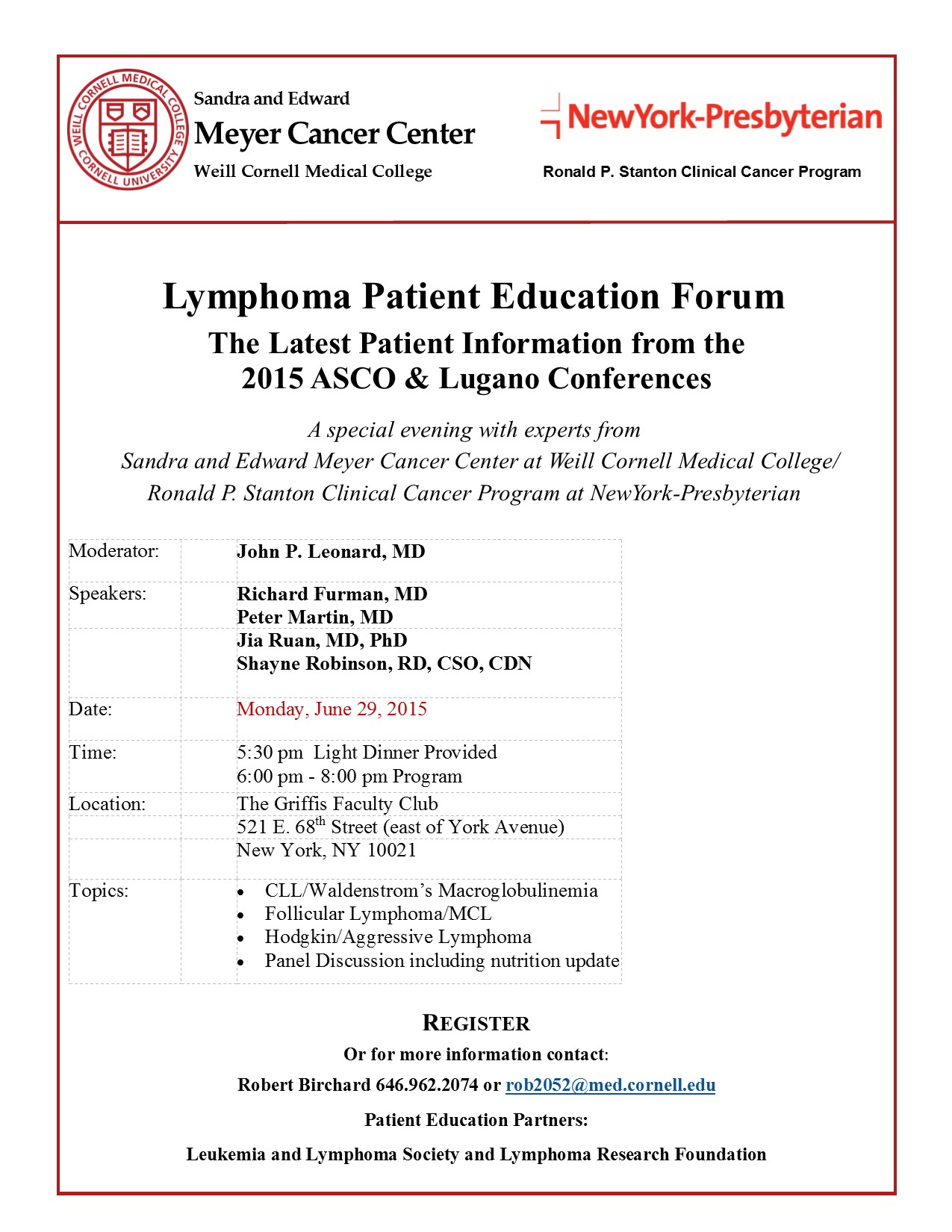

Lymphoma Patient Education Forum – June 29th

The Lymphoma Program at Weill Cornell Medical College invites you to hear from our experts about the latest advances in lymphoma treatment & nutrition:

Patient Edu Flyer Digital 052815

ASCO2015: A phase I/II Trial of the Combination of Romidepsin and Lenalidomide in Patients with Relapsed/Refractory Lymphoma and Myeloma: Activity in T-cell Lymphoma.

Picture2By Dr. Jia Ruan 

Romidepsin, a histone deacetylase inhibitor, and lenalidomide, an immunomodulatory agent, have previously shown efficacy and a lack of cumulative toxicity in the treatment of patients with relapsed/refractory lymphoma and myeloma. Results from phase I of this trial were previously reported in ASCO 2014. The maximum tolerated dose in cycle 1 for romidepsin was 14 mg/mIV on days 1, 8, and 15, while lenalidomide was 25 mg oral on days 1-21 of a 28-day cycle. In this trial patients were treated to progression or intolerance.  Results of patients with t-cell lymphoma were reported at the 2015 ASCO meeting.

21 patients (10 CTCL, 11 PTCL) with a median age of 64 were enrolled in this trial. 15 of these patients were treated at the maximum tolerated dose. 19 of these patients were evaluable for efficacy with an overall response rate of 53%. For patients the median time of response was 7.3 weeks, median event free survival was 15.5 weeks, and median overall survival was not reached. 10 out of 21 patients remained on therapy with 7 discontinued for disease progression, 3 for toxicity, and 1 for stem cell transplant. Side effects were generally expected and manageable.

Results from this study confirm that the romidepsin and lenalidomide combination has significant activity in relapsed and refractory T-cell lymphoma. This study demonstrated that novel biologic agent and combinations can be effective and well-tolerated treatment options for patients with T-cell lymphoma, who may be poor candidates for intensive therapy or have chemotherapy-resistant disease.