Lymphoma Program Hosts Oncologists from Brazil for Hematologic Malignancies Update

A group of more than 20 Brazilian oncologists traveled to Weill Cornell Medicine and NewYork-Presbyterian Hospital from South America to attend the 2017 Update in Hematologic Malignancies, a two-day interactive educational symposium organized and presented by members of the Weill Cornell Lymphoma Program’s research and clinical faculty. BrazilianHeme
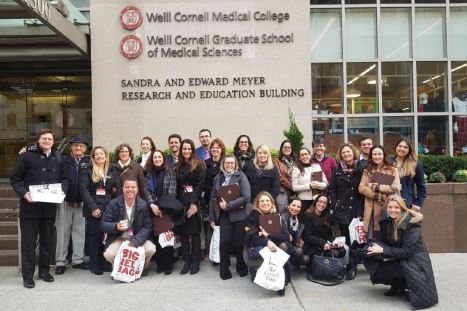
The meeting, directed by Dr. Sarah Rutherford, featured didactic lectures on chronic lymphocytic leukemia (CLL) and Richter’s Transformation (RT) by Drs. John Allan and Richard Furman, discussions of controversies and challenging cases in mantle cell, follicular and diffuse large B-cell lymphomas (MCL, FL, DLBCL) led by Drs. Rutherford and Peter Martin, a lymphoma-specific hematopathology update from Dr. Amy Chadburn, and a tour of Dr. Leandro Cerchietti’s research laboratory.

Programs like this one foster partnerships that can propel us toward our goal of improving health outcomes for the nearly 100,000 people around the world who are affected by lymphoma. Our team is able to establish collaborative international relationships to teach and learn from medical practitioners of a diverse background, all while solidifying our role as a trusted, global authority on lymphoma research and care.
sar2014
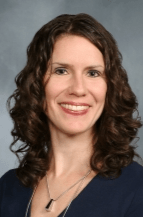
Dr. Sarah Rutherford

“The relationship we have established with the Brazilian oncologists is fulfilling for all of us,” says Dr. Rutherford. “We enjoy teaching them and helping to manage complex cases that they face in Brazil. We also remain in touch with them after the conference – providing guidance on patients and even traveling to Brazil to participate in meetings. We look forward to continuing this collaboration given our shared mission of providing the best possible care for patients with lymphoma.”
Dr. Jia Ruan and Colleagues Encouraged by Long-Term Results of Chemo-Free MCL Treatment Regimen

Mantle cell lymphoma (MCL) is a rare subtype of non-Hodgkin lymphoma that occurs primarily in older adults. The disease is typically managed in the initial treatment setting with a combination of chemotherapy and immunotherapy, which tends not to be curative and may impart toxic side effects in some patients.

In search of an effective, less toxic treatment option for those afflicted by MCL, Dr. Jia Ruan and colleagues explored an alternative regimen free of conventional chemotherapy – lenalidomide plus rituximab – to be used in the initial treatment setting. Their multi-center phase II clinical trial of the novel biological pairing was the first-ever study of a non-chemotherapy first-line MCL treatment approach.

Thirty-eight MCL patients enrolled in the trial from July 2011 to April 2014. They received lenalidomide on days 1-21 of a 28-day cycle, and rituximab was administered four times per week during the first cycle, then once every other cycle. The first 12-cycle treatment was considered induction, or initial therapy, and was followed by a maintenance phase, in which therapy is provided to prevent relapse. Treatment was continuous until disease progression, and patients had the option to cease therapy after three years if in remission.

At the 2017 American Society of Hematology Annual Meeting, the researchers examined the long-term outcomes of the trial in a 5-year follow-up analysis to reveal that the drug combination shows promise for effective management of MCL, with the majority of trial participants doing well and maintaining good quality of life. About 90 percent of patients responded to the therapy, and over 60 percent remain in remission.

The research team also measured minimal residual disease (MRD) in patients’ blood, the small number of cancer cells that may be left after treatment that have the potential to grow and cause the patient to relapse. In the small subset of patients with available tumor tissues for MRD analysis, about 80 percent of patients were found to be MRD negative, further demonstrating the novel treatment regimen’s activity and feasibility as an additional therapeutic option for people with MCL.

Picture2
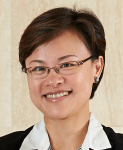
Dr. Jia Ruan

“We are encouraged by the quality and durability of the responses with the biologic doublet of lenalidomide plus rituximab as initial therapy for mantle cell lymphoma,” said Dr. Ruan. “We hope to bring this active combination to larger studies where it can be combined with other agents and compared to conventional chemotherapy.”

FDA-Approved Drug to Treat Viral Infections Shows Promise Against Lymphomas

Ribavirin, a drug that has been approved by the Food and Drug Administration (FDA) to treat hepatitis C, as well as some viral respiratory infections and viral hemorrhagic fevers, has shown promising activity against some types of lymphoma. There is a growing movement to repurpose older drugs that might have mechanisms of action that could benefit cancer patients.

lec2010
Dr. Leandro Cerchietti

Based on preclinical work performed in the laboratory of Dr. Leandro Cerchietti, the Weill Cornell Medicine and NewYork-Presbyterian Lymphoma Program is planning a clinical trial examining the oral antiviral drug ribavirin in patients with two non-Hodgkin lymphoma subtypes, slow growing follicular lymphoma and mantle cell lymphoma. This clinical trial will be led by principal investigator Dr. Sarah Rutherford.

Previously, physicians and scientists in the Weill Cornell Medicine Lymphoma Program have demonstrated that ribavirin may be able to inhibit lymphoma cell growth. Dr. Cerchietti’s laboratory research has shown that the eukaryotic translation initiation factor 4E (eiF4E) is blocked by ribavirin in B-cell lymphoma cell lines, as well as in patient-derived xenograft (PDX) models, which more closely resemble the way cancer behaves in the human body. Blocking eiF4E ultimately leads to decreases in key proteins (MYC, BCL2, and BCL6) which are crucial for lymphoma cells’ survival.

sar2014
Dr. Sarah Rutherford

Additionally, Dr. Rutherford conducted a retrospective review of patients with lymphoma who underwent stem cell transplants at NewYork-Presbyterian Hospital/Weill Cornell Medicine. Patients who were treated with ribavirin for viral infections just before or after their stem cell transplant had better lymphoma-related outcomes compared to what was expected based on their disease risk profiles.

This clinical trial, run by Dr. Rutherford and Dr. Cerchietti, will enroll patients with follicular lymphoma and mantle cell lymphoma, and they will receive 3-6 months of oral ribavirin. Using a blood test, Dr. Rutherford and Dr. Cerchietti will monitor for the presence of a marker of lymphoma in the blood to confirm that ribavirin has the intended anti-lymphoma effect.

“We are excited about opening this clinical trial and aim to conduct additional trials in the future that combine ribavirin with other drugs,” said Dr. Rutherford. “Our goal is to ultimately develop a well-tolerated, targeted oral regimen to control lymphomas.”

This preclinical research is supported by a Translational Research Program from the Leukemia and Lymphoma Society (LLS) awarded to Dr. Cerchietti.