Paola Ghione, MD
Dr. Ghione is a visiting hematology fellow from Torino, Italy who is working with the Weill Cornell Lymphoma Program for six months.
Rituximab is a drug that is used to treat B-cell non-Hodgkin lymphomas. It is a type of immunotherapy called a monoclonal antibody, and it works by targeting CD20, a protein present on the surface of the B-cells.
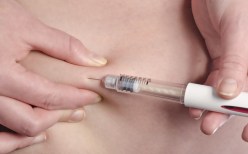 In the United States, rituximab is administered by intravenous (IV) infusion, often over several hours. In March 2014, a formulation of rituximab for subcutaneous injection (under the skin rather than directly into the vein) was approved by the European Medicines Agency, and Health Canada approved the subcutaneous formulation in September 2016. At my home institution – the University of Torino — we have been using subcutaneous rituximab routinely. Advantages for patients include the faster administration time, usually less than 10 minutes. Institutions may prefer subcutaneous rituximab because it is administered as a fixed dose, which can reduce the preparation time and waste.
The first study to compare the two formulations was conducted in Europe from 2009 to 2012 in 124 people receiving rituximab maintenance for follicular lymphoma. The purpose of this study was to identify a comparable dose and to compare safety. The second study, called “SABRINA” was conducted in Europe, Canada, and Thailand, with the participation of 127 people with previously untreated follicular lymphoma who were receiving chemotherapy plus rituximab. Patients responded equally to treatment with both formulations (intravenous versus subcutaneous), and no differences were found in terms of safety. In comparing the side effects, IV administration was linked to more gastrointestinal-based events (such as diarrhea and nausea), while skin reactions (usually redness at the injection site) were more common with subcutaneous rituximab.
In another large study, called “MABEASE,” 576 people with diffuse large B-cell lymphoma participated in a clinical trial in which they were randomized to receive CHOP chemotherapy with either subcutaneous or intravenous rituximab. Again, the efficacy of the two formulations was similar and the subcutaneous administration was associated with increased administration-related reactions (mainly rash).
Finally, a clinical trial called “PrefMab” enrolled more than 700 people with diffuse large B-cell lymphoma and follicular lymphoma with the aim of evaluating patient satisfaction using both administration methods. One group of participants started with intravenous infusion and then switched to subcutaneous, and vice-versa for the second group. In general, patients preferred the subcutaneous formulation. Specifically, 80% of the patients preferred the subcutaneous formulation, 10% still preferred the intravenous one and 10% had no preference. This preference was largely due to the reduction of time spent in the hospital and the comfort of the administration.
In addition to efficacy, safety, and patient preference, the financial impact of the new formulation is worth considering. Two groups have conducted economic studies on this subject. The Roche study found that the subcutaneous formulation was associated with reduced costs due to less staff time (nurses, technicians and pharmacists), shorter time in the bed/chair in the infusion center, and a reduction in wasted drug and materials related to the infusion. The Italian study reported an overall saving of 6.057 euros ($6.464 USD) for each rituximab administration. The financial impact might differ in different healthcare systems.
Subcutaneous rituximab is not currently available in the United States, but the Food and Drug Administration (FDA) accepted a Biologics License Application in November 2016. This means that probably the formulation will be soon available in the U.S. market.

 Weill Cornell Medicine (WCM) and NewYork-Presbyterian (NYP) partnered with OncLive on May 4, 2017, to present the State of the Science Summit on Treatment of Hematologic Malignancies in Queens, NY.
 New Developments in Lymphoma