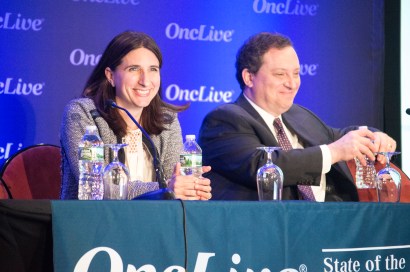
Dr. Lisa Roth Highlights Differences in Treatment Approaches for Pediatric Vs. Adult Hodgkin Lymphoma

SOSS_Roth_FurmanAt OncLive’s State of the Science Summit on Hematologic Malignancies, Dr. Lisa Roth, head of the Adolescent and Young Adult (AYA) Lymphoma Program at Weill Cornell Medicine and NewYork-Presbyterian, outlined some of the differences in treatment approaches between pediatric and adult patients with Hodgkin lymphoma (HL), a cancer commonly diagnosed in young adults in their twenties.

According to the National Institutes of Health (NIH), patients between 15 and 39 years of age are considered part of the AYA population.

“A patient in this age range can walk into a pediatric oncologist’s office or a medical oncologist’s office and receive vastly different treatment for the exact same diagnosis,” said Dr. Roth, highlighting the medical landscape’s current lack of and need for research in order to understand how to optimize care for AYA patients.

To compare and contrast the approaches, Dr. Roth broke down the components of the pediatric and adult treatment regimens for a standard case of Hodgkin lymphoma.

A HL patient treated under the pediatric regimen would typically receive four cycles of the chemotherapy drug combination doxorubicin hydrochloride, bleomycin, vincristine sulfate, etoposide phosphate, prednisone, and cyclophosphamide (ABVE-PC) over 12 weeks, as compared to the adult regimen of six cycles of chemotherapy drug combination doxorubicin hydrochloride, bleomycin, vinblastine sulfate, and dacarbazine (ABVD) over 24 weeks. About half of pediatric patients would receive radiation following ABVE-PC while very few adult patients would receive the same following ABVD.

Compared to its adult counterpart, the pediatric regimen has lower cumulative exposure to anthracycline, a drug class associated with cardiac toxicity that includes doxorubicin, as well as a lower dosage of bleomycin, a drug associated with pulmonary toxicity.

On the other hand, the adult ABVD regimen does not contain drugs etoposide or cyclophosphamide, both of which are associated with risk of secondary malignancies and infertility.

Dr. Roth explained that outcome improvements in adolescent and young adult patients are lagging behind those in both pediatric and adult populations – a disparity partially connected to the deficit of clinical and translational research focusing specifically on this age group. Other contributing factors may relate to differences in tumor biology in the AYA group that doctors do not yet fully understand, as well as the group’s tendency to delay physician consultation and to have limited healthcare access due to being under or uninsured.

Because the AYA population has such unique needs, they require a multidisciplinary team to guide them through each stage of their treatment process. The Weill Cornell Medicine/NewYork-Presbyterian Adolescent and Young Adult Lymphoma Program is composed of pediatric and medical oncologists, radiation oncologists, bone marrow transplant experts, fertility preservation specialists, and psychologists and social workers. The team also includes physicians who specialize in survivorship to allow for seamless care from treatment to beyond, which is specifically relevant for patients of this age range who are very likely to have many years of life to look forward to once cured of their disease.

WCM’s AYA Lymphoma Program is working hard to expand pediatric patients’ access to upcoming clinical trials and to develop trials specific to the AYA population.

For more from Dr. Roth on the intricacies of treating the AYA population, watch this video courtesy of OncLive:
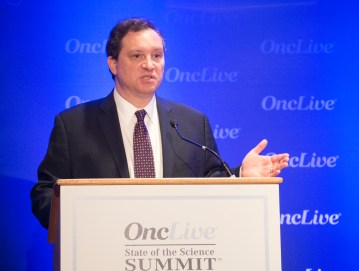
Dr. Richard Furman Examines Future of CLL Risk Assessment

At OncLive’s State of the Science Summit on Hematologic Malignancies, Dr. Richard Furman, director of the Chronic Lymphocytic Leukemia (CLL) Research Center at Weill Cornell Medicine, discussed how medical oncologists should be using prognostic markers to make risk assessments in order to determine individualized treatments for their patients with CLL.

SOSS_Richard_FurmanDr. Furman noted that current CLL therapies are effective, but they often lead to complications. CLL patients treated with standard chemotherapy drug combination fludarabine, cyclophosphamide, rituximab (FCR) are often prone to developing treatment resistance or Richter’s transformations (RT), in which their CLL transforms into a more aggressive diffuse large B-cell lymphoma (DLBCL). They may also succumb to infectious complications, adverse events, or secondary malignancies.

Because of the risks associated with FCR treatment, Dr. Furman suggested a movement toward treatment agents that are not as toxic, such as ibrutinib. But even with ibrutinib, patients can develop resistance to treatment. For example, in cysteine481-to-serine mutations, the amino acid in Bruton’s tyrosine kinase (BTK) that ibrutinib binds to is changed from a cysteine to a serine, prohibiting ibrutinib from continuing to bind. This results in inadequate ibrutinib coverage and enables CLL cells to escape treatment and survive.

According to Dr. Furman, a large number of CLL patients will have excellent responses and enjoy very long progression free survivals. What is important is to identify those who will not and to devise a treatment strategy that can improve their outcomes. Currently, interphase FISH (demonstrating deletion 11q or 17p), NOTCH1 mutation, or certain V genes help identify those patients who will progress on currently novel agents or have a risk of Richter’s transformation. In the future, stimulated karyotyping, or evaluating changes in the chromosomes after stimulation of the CLL cells, will also be of great importance.

The CLL team at Weill Cornell Medicine and NewYork-Presbyterian is currently investigating an early intervention trial in which patients at risk of developing Richter’s transformation or resistance to BTK inhibitors receive intervention before the mutations have a chance to develop. Our team is also looking into the use of combination therapies, such as ibrutinib and venetoclax, in treatment of CLL patients.

Additionally, Dr. Furman pointed out that prognostic markers are dependent upon the setting in which they’re used. Those used for FCR, such as minimal residual disease (MRD), don’t necessarily apply to ibrutinib. He said that prognostic markers are traditionally based upon responses, but we now need to start looking at them from a progression-free survival (PFS) perspective.

To hear more from Dr. Furman about the outlook of CLL prognostic markers, check out this short OncLive clip:

Is Cutaneous T-Cell Lymphoma Hereditary?

Patients often question whether various lymphoma types run in families, concerned that their own diagnosis may indicate cancer risk for their loved ones, as well. When an inquiry regarding the possibility of genetic predisposition in cutaneous T-cell lymphoma (CTCL) recently came through our clinic, we sat down with expert Jia Ruan, MD, PhD, to break down what we know and what we don’t know about the cause of this rare and complex condition.Dr. Ruan at computer

T-cell lymphomas are a form of non-Hodgkin lymphoma caused by abnormal growth of mature T-cell lymphocytes, a type of white blood cell found in the immune system. In healthy people, T-cell lymphocytes are responsible for attacking foreign antigens and viruses, and aiding B-cell lymphocytes in antibody production – but by the process of clonal evolution, the T-cell lymphocytes mutate and produce abnormal offspring that become lymphoma. When T-cell lymphomas affect the skin, they are known as cutaneous T-cell lymphomas (CTCL).

The most common subtype of CTCL, mycosis fungoides (MF), occurs when malignant cells develop from CD4+CD45RO+ T-lymphocytes and migrate to the skin. Symptoms include scaly and itchy rash-like patches that may thicken over time and develop into a plaque or a tumor. If the cancer then makes its way from the skin to the lymphatic and blood system, MF becomes the more aggressive Sézary syndrome (SS). MF patients with limited skin symptoms do very well with skin-directed treatment, such as light therapy and topical medicines including steroids, while those with more extensive skin involvement or SS often require systemic treatment.

Although mycosis fungoides and Sézary syndrome are the most common types of cutaneous T-cell lymphoma, they are still quite rare, occurring in only 4-5 percent of non-Hodgkin lymphoma cases, with about 3,000 new diagnoses per year. The median age at diagnosis is 50-70, with a prevalence in men and African Americans.

It is in part due to their rarity that doctors and researchers have yet to understand what causes MF/SS. While there is no definitive evidence of familial risk of CTCL, scientists are continually evaluating whether genetics play a role in the disease formation.

Human leukocyte antigen (HLA) genes, which enable the immune system to discern between proteins native and foreign to the body, possess specific variations, or alleles, that are inherited via the family germline and passed through generations. When a certain HLA class II allele (specifically DQB1*04) was measured in a study of six families, each with occurrences of mycosis fungoides in two first-degree relatives, researchers found the allele to appear more frequently in patients than in the healthy control population, thus suggesting an association of the allele with familial MF. It is worth noting, however, that although some familial clusters of MF have been reported, the vast majority of CTCL cases occur without a familial link.

Additionally, deep genetic sequencing (whole exome) of mycosis fungoides samples, in which the patients’ DNA was analyzed to identify genetic variants, revealed recurrent mutations that seem to be acquired during a lifetime, rather than inherited – also known as somatic mutations. Somatic mutations are believed to be a leading factor in the unchecked cell division in most cancers. The examples of alterations included genes involved in: T-cell activation and programmed cell death (apoptosis), NF-κB signaling that plays a role in cell proliferation and survival, remodeling of chromatin (the DNA and proteins from which chromosomes are derived), and DNA damage response.

Without any strong scientific evidence of hereditary susceptibility, CTCL will likely continue to be thought of as an acquired disorder. Those with skin rash who are concerned about risk and family history are encouraged to see a dermatologist, who can refer to an oncologist or other specialist if the CTCL diagnosis is confirmed.

References:

Journal of the American Academy of Dermatology, 2005 Mar; 52: 393–402.

Nature Genetics, 2015 Sep; 47(9): 1011-9.