Click on the graphic above to watch this interview from the 2016 annual meeting of the American Society of Hematology, Lymphoma Program Director, Dr. John Leonard discusses results from the recently completed GALLIUM trial. In this trial researchers compared the safety and efficacy of either rituximab or obinutuzumab with chemotherapy followed by maintenance with the same agent as first-line therapy for patients with previously untreated follicular lymphoma.
2016 has been another productive year for research in the Lymphoma Program at Weill Cornell Medicine. Listed below are the abstracts we were involved in whole or in part to be presented at this year’s 58th Annual Meeting of the American Society of Hematology (ASH).
Look to this space for more information about developments during the ASH meetings this December 3-6.
Dr. Cerchietti is an Assistant Professor of Medicine and Raymond and Beverly Sackler Research Scholar at Weill Cornell Medicine. He received a grant from the LRF for his work in predicting follicular lymphoma transformation without biopsy. For follicular lymphoma (FL) patients their slow growing tumor can turn into a much more aggressive follicular lymphoma that limits their treatment options. The mechanisms behind these transformations are poorly understood, but researchers are trying to better understand the mechanism of transformation. Currently invasive and expensive biopsies are the only way to determine whether a patient is at risk for follicular transformation. Based on his previous research Dr. Cerchietti has determined that FL cells release certain products into a patient’s body, and that these products in the bloodstream can be used to anticipate FL transformation. Dr. Cerchietti plans to build on his previous research and potentially develop new non-chemotherapy treatments for follicular lymphoma.
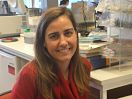
Pilar Dominguez Rodriguez, Ph.D.
Dr. Dominguez Rodriguez is a Post-Doctoral Associate, who specialized in cancer biology in Dr. Ari Melnick’s lab at Weill Cornell Medicine. Her current research focuses on the ten eleven translocation 2 (TET2) gene. TET2 is associated with DNA methylation, a process involved in the regulation of certain genes. Previously in patients with diffuse large B-cell lymphomas (DLBCL) the deregulation of DNA methylation has been identified as a source of DLBCL cell growth. However, researchers are still searching for answers as to why the methylation mechanisms malfunction. TET2 could potentially be a link due to its role in DNA methylation and the fact that is frequently mutated in lymphomas. Dr. Dominguez Rodriguez project seeks to discover whether there is a relationship between TET2 and DNA methylation in B-cells, and then identify how TET2 affects the development of DLBCL. If this relationship can be established the findings have the potential to identify new treatment targets for patients with B-cell lymphomas.



 New Developments in Lymphoma