
In early July, several researchers from the Weill Cornell Medicine/NewYork-Presbyterian (WCM/NYP) Lymphoma Program traveled to Shanghai, China to participate in the first Lymphoma Research Workshop, jointly sponsored by WCM/NYP and Shanghai Institute of Hematology (SIH). The workshop aimed to foster clinical and translational research exchange and collaboration, with the goal of further global alliance with leading Chinese institutions.
Our own Drs. Leandro Cerchietti, Peter Martin, Ari Melnick, Kristy Richards, and Jia Ruan were in attendance. Drs. Melnick and Ruan co-organized the workshop with Drs. Saijuan Chen and Weili Zhao from SIH. SIH and its affiliated Ruijin Hospital (RJH) is a leader in human genomics and lymphoma research in China.
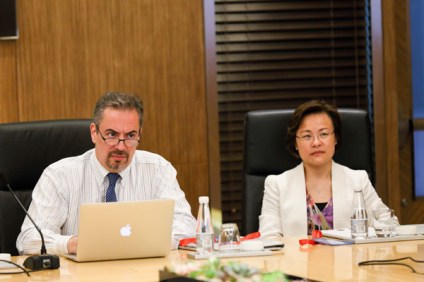
Dr. Melnick began by introducing the lymphoma research missions at WCM/NYP and provided an overview of our translational program, which integrates state-of-the-art genetic, epigenetic, and proteomic approaches to study lymphoma pathogenesis and inform development of mechanism-based therapeutics.
Dr. Zhao followed with a review of the recent lymphoma program developments at Ruijin Hospital, which focuses on building a multi-disciplinary diagnosis and treatment team. RJH’s translational development has been aimed at building a lymphoma biobank, next-generation sequencing, system biology, and biomarker investigations to support clinical research.
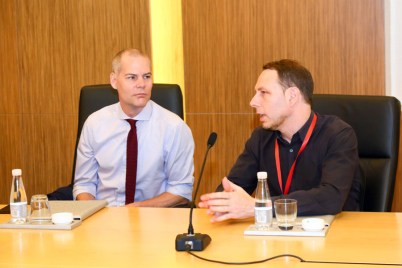
On the project level, Dr. Cerchietti discussed bench-to-bedside translation of epigenetic modifying agents, such as novel treatments that sensitize chemotherapy responses in patients with diffuse large B-cell lymphoma (DLBCL). Dr. Martin then provided a comprehensive overview of the management approach for DLBCL in the U.S., reviewing important study design and findings of DLBCL clinical trials that incorporated novel agents, including epigenetic modifiers. Dr. Richards spoke about promises and challenges in canine lymphoma research in both the disease and drug development models.
Additionally, Dr. Pengpeng Xu from RJH presented preliminary data of a phase 1 study using an epigenetic hypomethylating agent in combination with chemotherapy for DLBCL patients. This joint clinical project developed from the two institutions’ shared translational interest and expertise in exploring therapeutic potential of epigenetic agents in lymphoma.
Drs. Ruan and Melnick concluded the workshop by thanking the hosts at the Shanghai Institute of Hematology and Ruijin Hospital for their gracious hospitality. Faculty from both institutions are impressed by the progress of the ongoing collaboration and support further development of translational and clinical projects in the future, including academic exchange and joint translational and clinical trials.
 Chimeric antigen receptor (CAR) T-cell therapy is an emerging form of immunotherapy that leverages the strength of a patient’s own immune system to fight cancer.
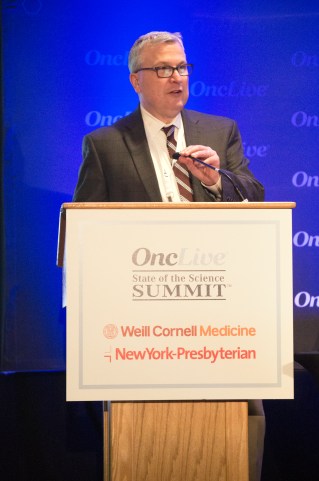
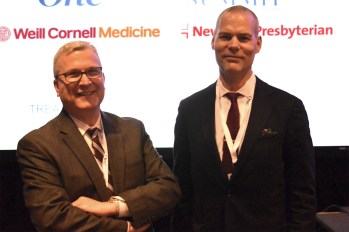 Weill Cornell Medicine (WCM) and NewYork-Presbyterian (NYP) partnered with OncLive on May 4, 2017, to present the State of the Science Summit on Treatment of Hematologic Malignancies in Queens, NY.
 New Developments in Lymphoma